The GEL PARTY brand notes · B2B edition
Build a nail brand
people come back for.
Color gets the first look. Product judgement, honest documents and a system that works earn the second order.
Read the brand notes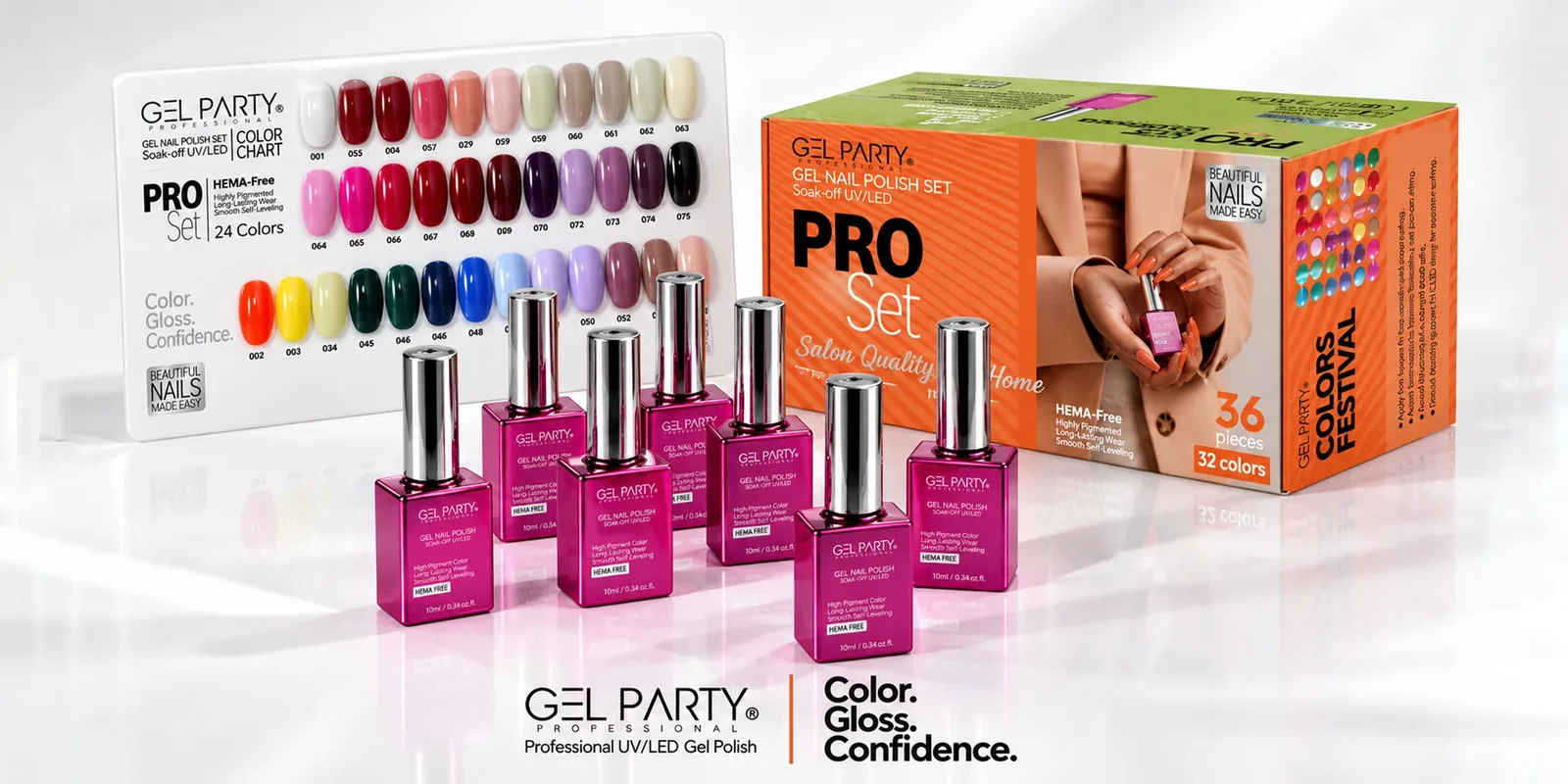 Color catches attention.
Consistency earns the next order.
A new nail brand rarely begins with a business plan. It begins with a shade someone cannot stop thinking about, a bottle that feels right in the hand, or a nail technician saying, “I wish somebody made this.”
That instinct matters. It is just not the whole brand.
The beauty industry is very good at making a launch look finished before the difficult questions have been answered. A logo appears on a stock bottle. Twelve attractive colors become a “collection.” A campaign goes live. Then a customer asks for the ingredient list, a salon cannot reproduce the application video, or the best-selling nude is suddenly indistinguishable from the other five nudes.
The stronger route is slower for a moment and much faster afterwards: decide who the brand is for, build a range that makes sense, test what goes into the bottle, and make every claim easy to substantiate. That is how a product becomes a system—and how a first purchase becomes a working relationship.
The first order is a design project.
The second is an operations report.
Start with a person, not a positioning statement
“For modern women” is not a useful brief. It does not tell you which viscosity to choose, how many nudes to launch, what the packaging must survive, or which question your customer will ask before paying.
A useful customer description is more ordinary and much more specific. A three-chair salon may want a dependable core system, fast replenishment and shades clients already ask for. A distributor needs a range with clear price levels, logical categories and documents ready for its market. An educator needs products that behave predictably in a classroom, plus instructions students can follow without improvisation.
Service comes first
Reliable application, a focused color wardrobe and simple reorders matter more than a vast catalogue.
The range must travel
Category structure, packaging consistency and market-ready paperwork become part of the product.
Recognition is the asset
A small number of ownable shades and a clear visual point of view beat a crowded launch.
Once that person is clear, many “creative” decisions become commercial decisions. You stop choosing products because they happen to be available and start choosing them because they do a job in someone’s day.
Range architecture
A collection should read like a sentence, not a storage shelf
Every product needs a reason to sit beside the next one. Explore four layers that turn separate SKUs into a brand people can understand.
01 / Foundation
Build the routine before the spectacle
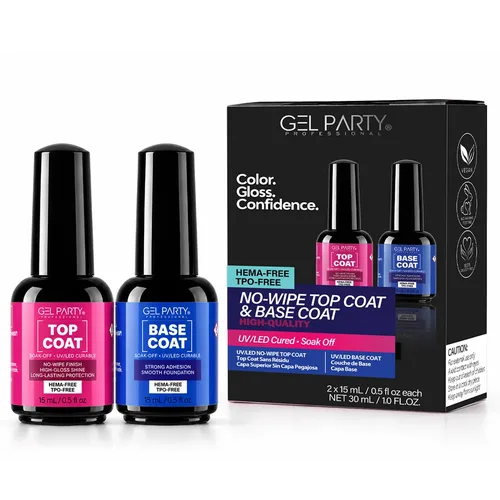
Prep, base, color, top, builder and removal belong to one customer routine. When these products are chosen together, education becomes clearer and a salon has fewer compatibility questions to solve.
- Start with the services your customer actually offers.
- Define which products are used together.
- Add depth only where demand or technique justifies it.
02 / Recognition
Edit shades as carefully as copy
A color wardrobe should cover real wear occasions without forcing the customer to compare near-duplicates. Keep a useful core, then create a few shades that could only belong to your label.
- Give every shade a distinct role.
- Keep the name, code and finish consistent everywhere.
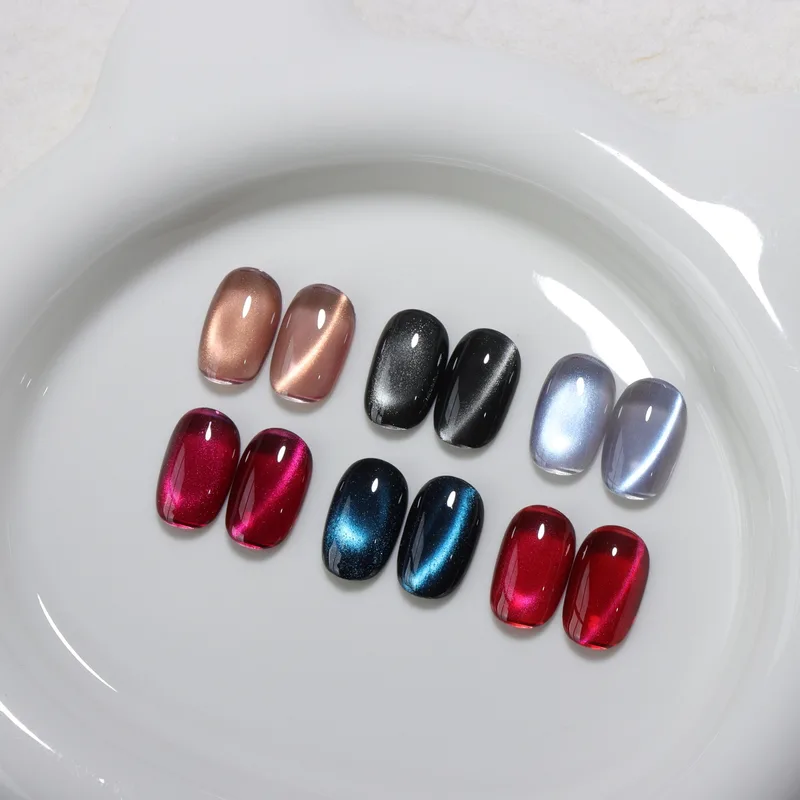
- Show real swatches rather than relying on bottle color.
03 / Expression
Use effects to create a reason to look again
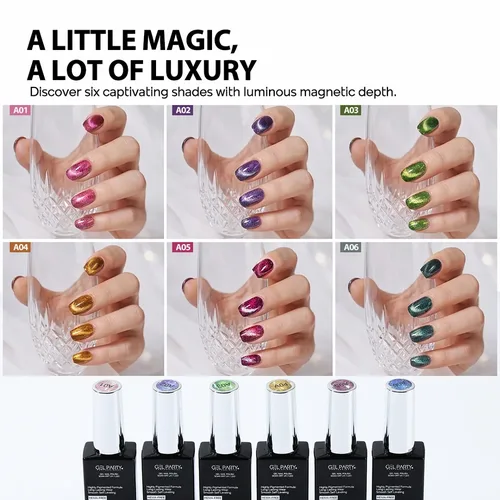
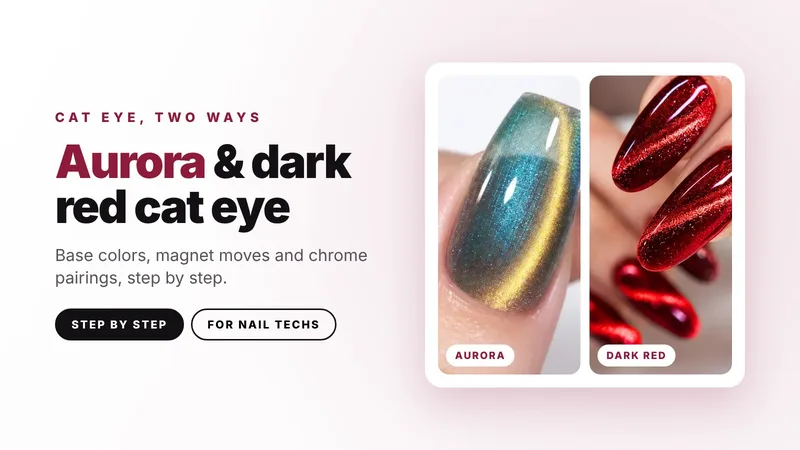
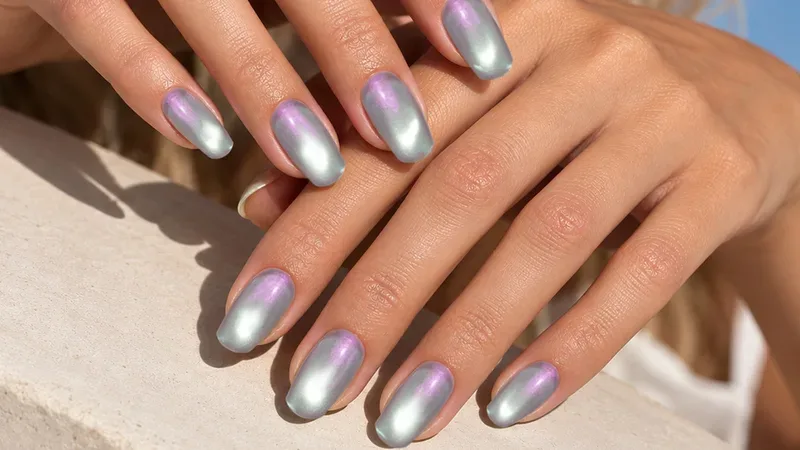
Cat eye, reflective, glitter and art products give a brand movement and launch moments. They work best as a deliberate creative layer—not as a substitute for a dependable core range.
- Choose effects that suit the brand’s visual identity.
- Demonstrate the effect under real lighting.
- Pair each launch with a technique customers can learn.
04 / Confidence
Instructions are part of the formula experience
A customer cannot separate a product from the result they achieve with it. Preparation, coat thickness, lamp guidance, storage and removal all influence that result—and all belong in the brand’s education system.
- Publish one reliable application protocol per system.
- Answer common failures without blaming the customer.
- Keep aftercare visible after the sale, not buried in a PDF.
The transparency shift
Your customer is reading the label now
Ingredient communication is no longer a back-office detail. In Mintel’s 2026 US nail color and care research, category users reported both closer ingredient scrutiny and changes in what they prefer to avoid.
Read the Mintel report summarypay more attention to product ingredients than they did a year ago
say they avoid harsh chemicals or acetone-based removers
Source: Mintel, US Nail Color and Care Market Report 2026. Figures describe surveyed category users and are separate responses, not segments of one whole.
Product judgement
Quality should survive a Tuesday afternoon in the salon
A sample can look wonderful under studio lights and still be wrong for a working technician. The useful test happens at the nail table, in ordinary conditions, with the same preparation and lamp protocol you expect your customer to use.
Judge the whole experience. How does the gel move from the brush? Does a thin coat deliver the expected coverage? Does the product stay where it is placed? Does the finish match the claim after proper curing? Can the next technician reproduce the result from the instructions alone?
Interactive working checklist
Before you approve the sample
A practical review aid, not a laboratory test or a claim about any individual formula.
Proof before poetry
A beautiful claim still needs a document behind it
Good paperwork does not make a brand feel clinical. It makes the creative promise believable.
Safe handling, tied to the formula
Use the Safety Data Sheet for the exact product to inform handling and professional training. It is not, by itself, a certificate of product quality or a complete consumer ingredient list.
Batch-specific verification
A Certificate of Analysis belongs to a production batch. Check that its product and batch references match the goods and the agreed specification.
Claims matched word for word
“Free-from” should describe a precise formula, never an entire brand by implication. The ingredient information and intended market must support the wording.
core formulas with an explicit HEMA-free and TPO-free statement in the supplied GEL PARTY ingredient sheet
The GEL PARTY formula file
Specific formulas. Specific evidence.
Builder Gel, Poly Gel, Bonder Gel, Blooming Gel, Gel Nail Polish, Top Coat and Base Coat carry that explicit statement. For Cat Eye, Rubber Base, Hard & Solid Gel and Nail Glue Gel, the documents use different evidence language—so this review preserves that difference rather than turning every record into the same marketing claim.
Review the formula-by-formula evidence 11 products
| Product / formula | HEMA | TPO | Document basis |
|---|---|---|---|
| UV/LED Base Coat | Free-from stated | Free-from stated | CTB26071304301CS01 + ingredient sheet |
| UV/LED Top Coat | Free-from stated | Free-from stated | CTB26071304304CS01 + ingredient sheet |
| Builder Gel | Free-from stated | Free-from stated | CTB26042401406CS01 + ingredient sheet |
| Poly Gel | Free-from stated | Free-from stated | CTB26071304305CS01 + ingredient sheet |
| UV/LED Bond Primer (Bonder Gel) | Free-from stated | Free-from stated | CTB26071304302CS01 + ingredient sheet |
| Blooming Gel | Free-from stated | Free-from stated | CTB26042401405CS01 + ingredient sheet |
| UV/LED Gel Nail Polish | Free-from stated | Free-from stated | CTB26071304303CS01 + ingredient sheet |
| Nail Glue Gel, UV/LED cured | Not listed in Section 3 | Not listed in Section 3 | CTB26071506101CS01 |
| Cat Eye Gel Polish | Not intentionally added | Not intentionally added | CTB25111008401CS01 + Section 3 formula notes; TPO-L is used |
| Rubber Base Gel | Not listed in Section 3 | Not listed in Section 3 | CTB25122913804CS01 |
| Hard & Solid Gel | Not listed in Section 3 | Not listed in Section 3 | CTB25122913805CS01 |
TMO (CAS 270586-78-2), listed in the Rubber Base and Hard & Solid Gel documents, is a different substance from TPO (CAS 75980-60-8). Claims should always be matched to the exact SKU, current formula and destination market; older kit documents must not be substituted for the current formula file.
HEMA-free and TPO-free are not synonyms for “hypoallergenic.” The supplied GEL PARTY documents support formula-specific claims, not a blanket statement that every product or older formula is identical. Avoiding skin contact and following the product’s directions remain essential. NailKnowledge on free-from claims.
For the EU, Commission Regulation (EU) 2025/877 added TPO to the prohibited-substances list with application from 1 September 2025. In the US, the FDA states that cosmetic products and ingredients generally do not require pre-market FDA approval, except most color additives. Facility registration is not product approval. EU regulation · FDA nail product guidance.
A recognizable color language
A number identifies the shade. A name gives it a life.
Customers do not experience a colour library as a spreadsheet. They remember “the pink I wore at my sister’s wedding” or “that silver with the lilac flash.” Names create memory; codes keep operations accurate. A serious range needs both.
The same discipline should continue online. A useful shade page gives search engines and customers the same clear information: product type, shade name, code, finish, coverage, application and honest swatches. “Pink 15” alone gives either side very little to hold on to.
A code without a world around it.
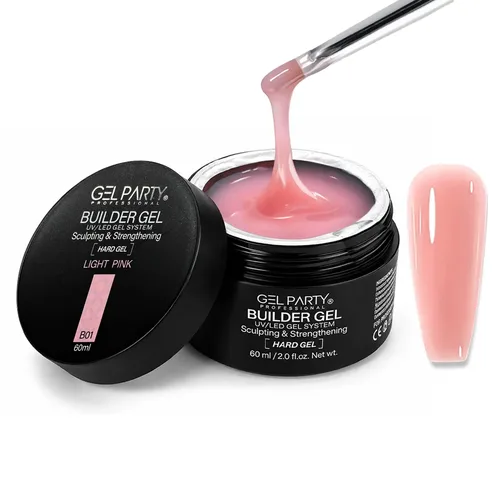
GEL PARTY Builder Gel
Name + code + product type, supported by real swatches, finish and application details.Packaging with a job to do
The bottle is where the brand promise becomes physical
A luxurious object is pleasant. A luxurious object that protects the formula, works cleanly and survives the journey is better.
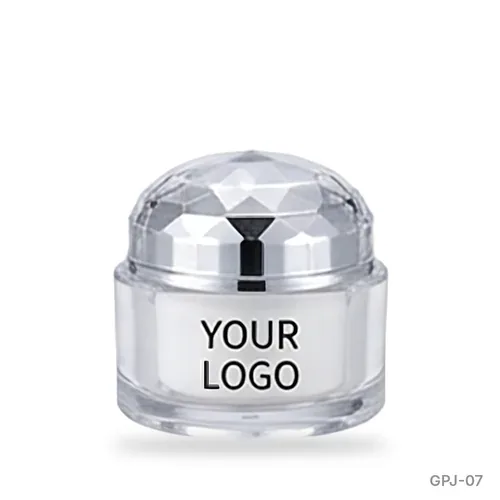
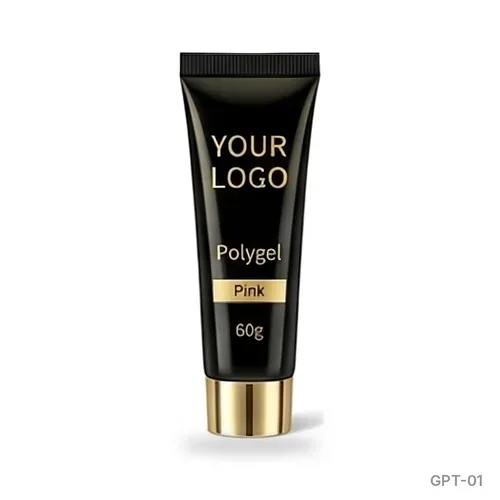
Then make the family recognizable. Repeat the label grid, shade-code position, typography and information hierarchy across formats. A jar and a bottle do not need identical shapes to look as though they belong to the same brand.
Do not let visual polish outrun the unglamorous checks: closure fit, label adhesion, filling accuracy, transport resistance, readable warnings and the customer’s ability to identify the exact shade after the outer box is gone.
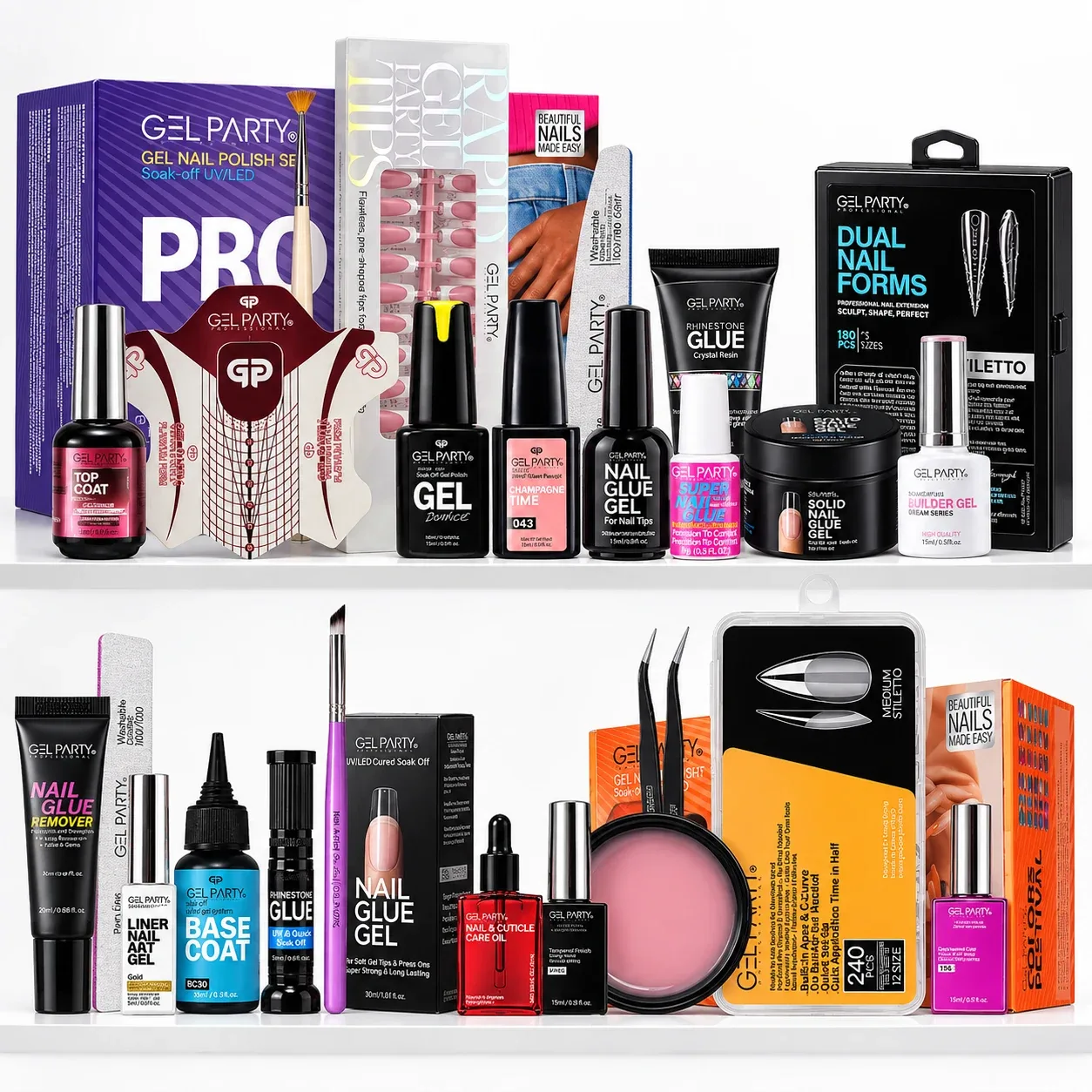 Teach the look. Support the wear. Welcome the refill.
Design for the second order
The sale is a middle step, not the finish line
Mintel describes increasingly hybrid nail routines: salons remain important for expertise and advanced services, while at-home products support maintenance, touch-ups, removal and recovery. That gives a brand a useful role between appointments.
For each core product, create four simple assets: an honest swatch, a concise application demonstration, a troubleshooting guide and an aftercare routine. For each new shade, decide where it fits the existing wardrobe before planning the launch graphics.
Repeat purchase then stops looking like a discount problem. Customers return because the product is familiar, the result is reproducible and the next choice is easy.
Mintel on hybrid nail routinesFrom brief to bottle
Where GEL PARTY fits into the work
GEL PARTY’s B2B model lets a business choose how much development it wants to take on. The routes can be combined: ready formulas for the core range, custom work for the shades or details that make the label distinct.
A focused start
Select existing formulas and stock packaging, then add your brand identity.
Developed for your label
Work from a desired shade range, viscosity or finish with the manufacturer’s development team.
Made to your specification
Bring your references, color standards and packaging design for production to your brief.
- 1–2 daysQuote
Products, quantities, market and packaging are clarified in a written quote.
- 10–14 daysSamples
The selected formulas and shades are prepared for real evaluation.
- Your approvalSign-off
Samples and final artwork are approved before production begins.
- 25–35 daysProduction
Production follows approval and deposit; shipping time depends on destination and method.
Timings shown are GEL PARTY’s stated B2B estimates. Order quantities depend on the products, formulas and packaging selected and are confirmed in the quote.
Build the system first.
Then make it unmistakably yours.