"HEMA-free" and "TPO-free" are now printed on gel polish bottles all over the world. But what do these labels actually mean, why did they appear, and how much safer do they make your manicure?
This guide explains the chemistry in plain language, summarizes what peer-reviewed dermatology research has found, and walks through the regulations that changed the nail industry in 2025 and 2026. Every number below comes from a published study or an official source, listed at the end of the article.
What are HEMA and TPO?
Gel polish, builder gel and rubber base are liquid mixtures of small building blocks called monomers and oligomers. Under a UV or LED lamp they link together into a hard, glossy plastic. Two ingredients are central to that process, and they do very different jobs.
HEMA (2-hydroxyethyl methacrylate) is one of the building blocks. It is a methacrylate monomer used because it helps gel adhere well to the natural nail and gives a smooth, flexible film. The catch is its size: HEMA is a very small molecule, with a molecular weight of about 130 g/mol. In its liquid, uncured form, it can pass into the skin, where the immune system may learn to treat it as an invader.
TPO (trimethylbenzoyl diphenylphosphine oxide) is not a building block at all. It is a photoinitiator, the "trigger" ingredient. When TPO absorbs light from the lamp, it splits into reactive fragments called radicals that start the chain reaction joining the monomers together. Chemists liked TPO because it absorbs a broad range of UV and visible light and causes little yellowing. Nail gels typically contained about 0.5 to 5% of it.
How gel cures under the lamp
Photoinitiators like TPO trigger the reaction. Monomers like HEMA are the pieces that link up. Once fully cured, the film is considered essentially inert.
HEMA-free vs TPO-free at a glance
The two labels address two different concerns. One is about allergy, the other is about a regulatory hazard classification.
| HEMA | TPO | |
|---|---|---|
| What it is | Methacrylate monomer (a building block) | Photoinitiator (the light-activated trigger) |
| Why it is used | Strong adhesion and a smooth, flexible film | Fast, even curing with little yellowing |
| Main concern | Skin sensitization: it is the most common cause of acrylate allergy from nail products | Reproductive toxicity classification (Repr. 1B), based mainly on animal studies |
| Who is most affected | Home users and nail technicians who get uncured gel on their skin | A hazard-based rule that applies to everyone, no proven harm to nail users |
| EU status | Allowed in nail products for professional use only, with an allergy warning (since 2021) | Banned in all cosmetics from 1 September 2025 |
| Great Britain | Professional-use restriction (inherited EU rule) | Banned for new products from 15 August 2026, off shelves by 14 February 2027 |
| United States | No federal restriction | Not banned; an industry safety review is ongoing |
| What the "free" label means | No HEMA in the formula (other acrylates are still present) | A different photoinitiator is used instead |
Why HEMA matters: what the research shows
Allergic contact dermatitis from acrylates is not new. Dentists and orthopedic surgeons have known about it for decades, and the American Contact Dermatitis Society named acrylates its "Allergen of the Year" back in 2012. What has changed is who is getting it. Since gel polish and at-home kits became popular, dermatology clinics have reported a steady rise in cases among nail clients, DIY users and nail technicians.
The numbers from patch-test clinics
Patch testing is how dermatologists confirm an allergy: tiny amounts of suspected allergens are taped to the back for 48 hours and the skin reaction is read over several days. Because nail-related cases kept rising, many clinics in Europe added HEMA to their standard (baseline) test series around 2019. These are some of the largest data sets since then:
How often clinics find acrylate allergy
Patients in these studies were referred to clinics for suspected skin allergy, so the rates are higher than in the general population. Sources 3–7.
A few findings stand out:
- Nail products are now the main source. In the 2017 UK and Ireland audit of 4,931 patients, 60% of people with acrylate allergy were sensitized by nail enhancements or nail and eyelash glue used recreationally. 33% were sensitized at work, mostly nail technicians, and only 7% by medical or dental materials. In Amsterdam, nail cosmetics caused about two thirds of non-occupational HEMA reactions.
- The trend is upward. The North American Contact Dermatitis Group found HEMA allergy in 3.2% of patients tested in 2019 to 2020, a statistically significant increase over 2009 to 2018.
- Home users are the largest group. Of 67 women diagnosed with nail-cosmetic acrylate allergy in Amsterdam between 2015 and 2023, 73% were consumers rather than professionals.
- HEMA is the best marker. 97% of those Amsterdam patients reacted to HEMA. It catches nearly all acrylate nail allergies, which is why dermatologists now test it routinely.
Why one allergy can follow you for life
Once someone is sensitized to an acrylate, the allergy is generally permanent. Future contact, even with a different brand, can trigger itching, redness and blistering around the nails and fingertips, nail loosening, and rashes that spread to the eyelids, face and neck.
The bigger worry is what happens outside the salon. Dermatologists at the British Association of Dermatologists have warned that an acrylate allergy can complicate later dental treatment and surgery, because many fillings, dental adhesives and medical devices use related (meth)acrylate chemistry. A gel manicure is optional. Dental work and joint replacement may not be.
Why uncured gel is the problem
Small, uncured monomers such as HEMA can pass through the skin and teach immune cells to react (left). A fully cured polymer network is too large to penetrate and is considered inert (right).
How sensitization actually happens
The research points to three common routes:
- Gel touching the skin. Polish flooding the cuticle or side walls, or a technician's fingertips touching wet product, delivers uncured monomer straight to the skin.
- Incomplete curing. A lamp that is too weak, the wrong wavelength for the product, layers that are too thick, or curing for too short a time leaves unreacted monomer in the nail. UK dermatologists specifically advise using the lamp recommended for the product, because mismatched lamps leave gel under-cured.
- Sticky residue and dust. The tacky inhibition layer and the dust from filing partly cured product both contain monomer.
This explains why home users are hit hardest. Applying gel to your own dominant hand, without training, makes skin contact much more likely.
Why TPO was banned (and what the ban does not mean)
TPO's story is completely different. It has nothing to do with allergy statistics. It comes from the EU's system for classifying hazardous chemicals.
In 2023 the European Commission reclassified TPO as a Category 1B reproductive toxicant (Delegated Regulation (EU) 2024/197). Category 1B means a substance is presumed toxic to human reproduction, based mainly on evidence from animal studies. EU cosmetics law has an automatic rule for substances with this classification: they must be banned unless the industry applies for, and wins, a specific exemption. No exemption was requested for TPO, so Commission Regulation (EU) 2025/877 added it to the list of prohibited cosmetic ingredients.
Key facts about the EU ban:
- Effective 1 September 2025 in all 27 EU countries. The ban also applies in Norway and Switzerland, which follow EU cosmetics rules.
- No sell-through period. Shops and salons had to remove remaining stock, and professionals may not use TPO products they bought before the deadline.
- An earlier opinion by the EU's Scientific Committee on Consumer Safety had judged TPO safe in professional nail gels up to 5%. The Commission says that opinion no longer applies after the reclassification.
- Member States voted 25 in favor, 1 against, with 1 abstention.
What replaced TPO?
Brands reformulated with other photoinitiators. The most widely used substitutes are TPO-L (INCI: ethyl trimethylbenzoyl phenylphosphinate), a liquid relative of TPO, and BAPO (phenylbis(2,4,6-trimethylbenzoyl)phosphine oxide), which works well in highly pigmented gels. Because the photoinitiator controls how the gel absorbs light, TPO-free gels are tuned to modern LED and UV/LED lamps. Always follow the cure times on the bottle.
The regulatory timeline
From warning to ban
- 2012The American Contact Dermatitis Society names acrylates "Allergen of the Year."
- 2018The British Association of Dermatologists warns of a rise in nail-acrylate allergy in the UK and Ireland.
- 2019European clinics start testing HEMA routinely in the baseline patch-test series.
- 3 Sep 2021EU: products containing HEMA or Di-HEMA trimethylhexyl dicarbamate must be labeled "for professional use only" and "can cause an allergic reaction."
- 2023–2024EU reclassifies TPO as a Category 1B reproductive toxicant.
- 1 Sep 2025EU bans TPO in all cosmetic products, with no sell-through period.
- 15 Aug 2026Great Britain: no new TPO-containing products may be placed on the market.
- 14 Feb 2027Great Britain: remaining TPO products must be off the shelves.
Rules by region
| Region | HEMA | TPO |
|---|---|---|
| European Union | Nail products: professional use only, with allergy warning (since 2021) | Prohibited in all cosmetics since 1 September 2025 |
| Great Britain | Professional use only (inherited EU rule) | Prohibited for new products from 15 August 2026, off shelves by 14 February 2027 |
| United States | No federal restriction | Not banned; an industry Cosmetic Ingredient Review assessment is ongoing |
Even in markets without a ban, many professionals and clients now prefer HEMA-free and TPO-free formulas, and brands that sell internationally are moving the same way.
How to read a gel polish label
Ingredient lists use standardized INCI names, so you can check any bottle yourself:
| Look for this INCI name | What it is | Notes |
|---|---|---|
| HEMA, or Hydroxyethyl Methacrylate | Methacrylate monomer | The most common nail-allergy trigger. Absent in HEMA-free products. |
| Di-HEMA Trimethylhexyl Dicarbamate | Larger urethane methacrylate | Also restricted to professional use in the EU. |
| Hydroxypropyl Methacrylate (HPMA) | Methacrylate monomer | Allowed, but a known sensitizer that often cross-reacts with HEMA. |
| Isobornyl Acrylate (IBOA) | Acrylate monomer | Named "Allergen of the Year" in 2020 by the American Contact Dermatitis Society. |
| Trimethylbenzoyl Diphenylphosphine Oxide | TPO, photoinitiator | Banned in the EU and, from 2026, in Great Britain. |
| Ethyl Trimethylbenzoyl Phenylphosphinate | TPO-L, photoinitiator | Common TPO replacement. |
Research has also found that labels are not always reliable, especially on cheap online marketplaces. In 2024 the Danish Consumer Council checked 70 gel polishes: 22 listed HEMA and/or Di-HEMA trimethylhexyl dicarbamate, 15 listed TPO, and 15 had missing or incorrect ingredient lists. Buy from brands that publish a full ingredient list and safety data.
Safer gel nail habits that matter as much as the formula
A HEMA-free bottle is only part of the answer. These habits, recommended by dermatologists, reduce exposure whatever product you use:
| Habit | Why it helps |
|---|---|
| Keep a small gap between the gel and the skin around the nail | Prevents uncured product from touching the skin, the main route to sensitization |
| Wipe away any flooding before curing | Once cured on the skin, it keeps irritating as it lifts |
| Apply thin, even layers | Thick layers cure poorly at the bottom |
| Use the lamp and cure times the manufacturer recommends | A mismatched or weak lamp leaves unreacted monomer |
| Don't touch the sticky layer, and use a lint-free wipe | The tacky inhibition layer contains uncured monomer |
| Nail techs: wear nitrile gloves and change them about every 30 minutes | Acrylates can pass through many glove materials over time |
| Clean brushes, tables and tools of wet gel | Hidden residue causes repeated low-level contact |
| See a dermatologist for patch testing if you notice itching, redness or nail loosening | Early diagnosis lets you avoid the allergen before it gets worse |
Choosing HEMA-free and TPO-free products from GEL PARTY
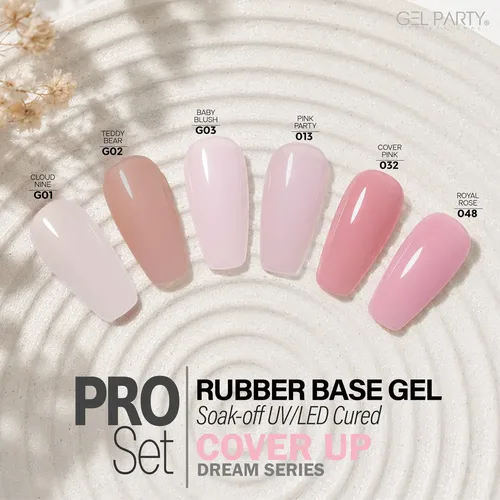
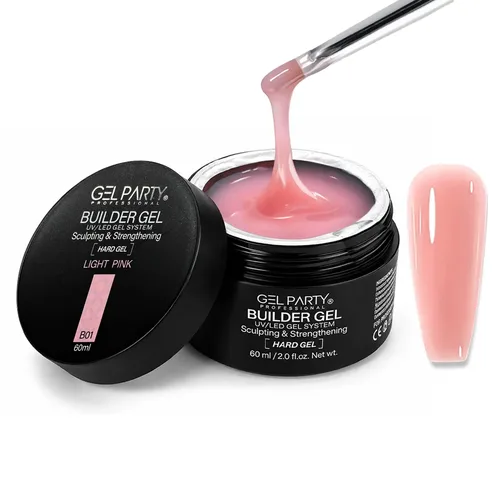
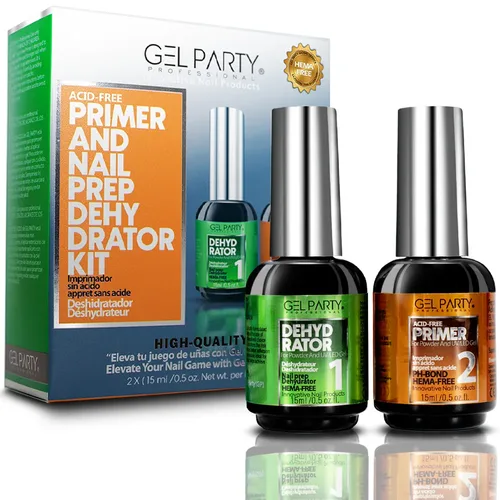
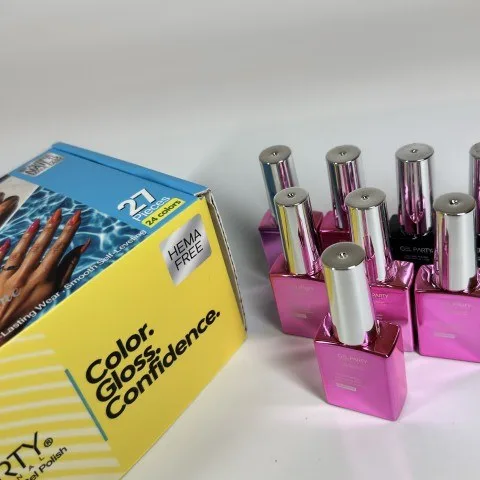
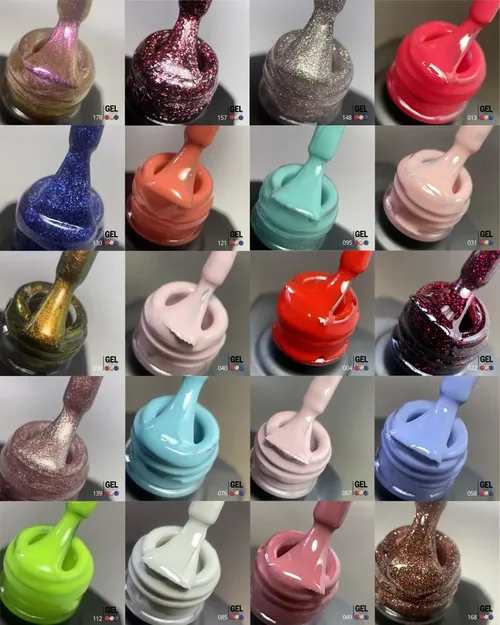
At GEL PARTY we label our formulas clearly, so you know what you are using before it touches a client. Our GELDANCE gel polish collections are formulated HEMA-free and TPO-free. Many of our other products, including builder gels, rubber base, our no-wipe top and base coat, and our nail prep primer, are HEMA-free. Look for the badges on each product page, which show the verified status of that specific item.
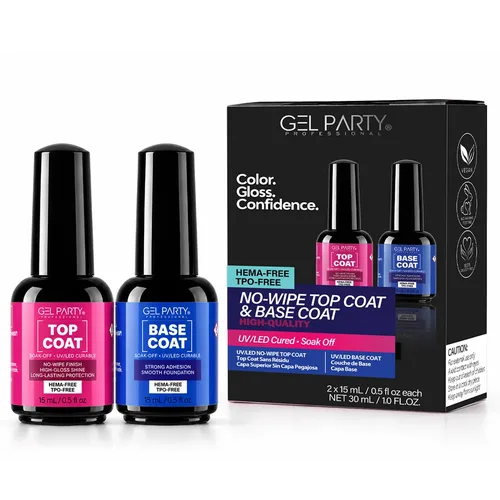
Pair them with good technique: a dehydrator and primer for adhesion, thin layers, and full cures. You can find step-by-step instructions in our how-to guides. If you are choosing an enhancement system, see builder gel vs poly gel vs acrylic.
Frequently asked questions
Is HEMA-free gel polish safe for people with a gel allergy?
Not necessarily. If you are already allergic to acrylates, you may react to other methacrylates in HEMA-free gels too, because they are chemically related. Ask a dermatologist for a patch test before using any gel product again. HEMA-free formulas are best seen as a way to lower the chance of developing an allergy in the first place.
Is TPO dangerous in gel nail polish?
TPO was banned in the EU because animal studies led to its classification as a presumed reproductive toxicant, not because harm to nail users was demonstrated. The amount in a manicure is small and absorption through the nail is limited. Still, TPO-free alternatives are widely available, and they are the only legal option in the EU and, from 2026, in Great Britain.
Is TPO banned in the United States?
No. As of late 2026 TPO is not banned in the US, and an industry safety review is still ongoing. Many brands selling in the US have reformulated anyway so that one formula can be sold worldwide.
Can I still use gel polish that contains TPO?
In the EU, shops and salons may no longer sell or use TPO products, with no sell-through period. In Great Britain, the deadlines are 15 August 2026 for new products and 14 February 2027 for removing remaining stock. Elsewhere, follow local rules. Wherever you are, checking the label lets you choose for yourself.
What are the signs of a gel nail allergy?
Itching, redness, swelling or small blisters on the fingertips and around the nails, nail loosening or pain, and rashes that may appear on the eyelids, face or neck. Symptoms often start several hours to days after the manicure. Remove the product and see a dermatologist.
Does "HEMA-free" mean the polish is non-toxic or 100% safe?
No. It means the formula does not contain HEMA, the most common acrylate allergen in nail products. Safe use still depends on full curing, keeping product off the skin, and following the instructions.
Why are home gel kits linked to more allergies?
Studies suggest that self-application leads to more skin contact and incomplete curing, from weak or mismatched lamps and thick layers. In the Amsterdam study, nearly three quarters of patients were consumers rather than professionals.
The bottom line
HEMA-free and TPO-free are not marketing buzzwords. They respond to two real developments: a well-documented rise in acrylate allergy linked to gel nails, and a new legal ban on TPO in Europe and Great Britain. Choosing formulas without these ingredients is a sensible step, especially for home users, sensitive clients and busy nail technicians. Combine those products with careful technique, and gel nails remain one of the most durable and beautiful manicures you can wear.
This article is for general information and is not medical advice. If you think you have reacted to a nail product, stop using it and consult a dermatologist.
Sources
- European Commission. TPO in nail products: questions and answers. 7 August 2025.
- Commission Regulation (EU) 2025/877 amending Annex II of the Cosmetics Regulation (prohibition of TPO). Official Journal of the European Union (EUR-Lex).
- British Association of Dermatologists. Dermatologists issue warning about UK artificial nail allergy epidemic (audit of 4,931 patients at 13 UK and Irish centers). 9 August 2018.
- DeKoven JG, et al. North American Contact Dermatitis Group patch test results: 2019–2020. Dermatitis. 2023;34(2):90–104. PubMed.
- Rodriguez I, George SE, Yu J, Adler BL. Tackling acrylate allergy: the sticky truth. Cutis. 2023;112(6):282–286. MDedge.
- Kocabas G, et al. Results of patch testing 2-hydroxyethyl methacrylate (HEMA) in the European baseline series: a 4-year retrospective study. Contact Dermatitis. 2024. doi:10.1111/cod.14488.
- Steunebrink IM, de Groot A, Rustemeyer T. Contact allergy to acrylate-containing nail cosmetics: a retrospective 8-year study. Contact Dermatitis. 2024;90(3):262–265. doi:10.1111/cod.14475.
- Commission Regulation (EU) 2020/1682 amending Annex III of the Cosmetics Regulation (HEMA and Di-HEMA trimethylhexyl dicarbamate). Legislation.gov.uk / EUR-Lex.
- Chemistry World. Why has the EU banned a key chemical in gel nail products? 2025.
- Cosmetic, Toiletry and Perfumery Association (CTPA). Ban of TPO gel nail ingredient in the EU and GB. 6 March 2026.
- NewBeauty. The TPO gel nail polish ban, explained for the US. 31 August 2026.
- Forbrugerrådet Tænk (Danish Consumer Council). Experts warn against gel polish: "Think twice" (review of 70 gel polishes). 5 February 2024.
- GreyB. TPO in cosmetics: regulatory status, challenges and alternatives (TPO-L and BAPO).