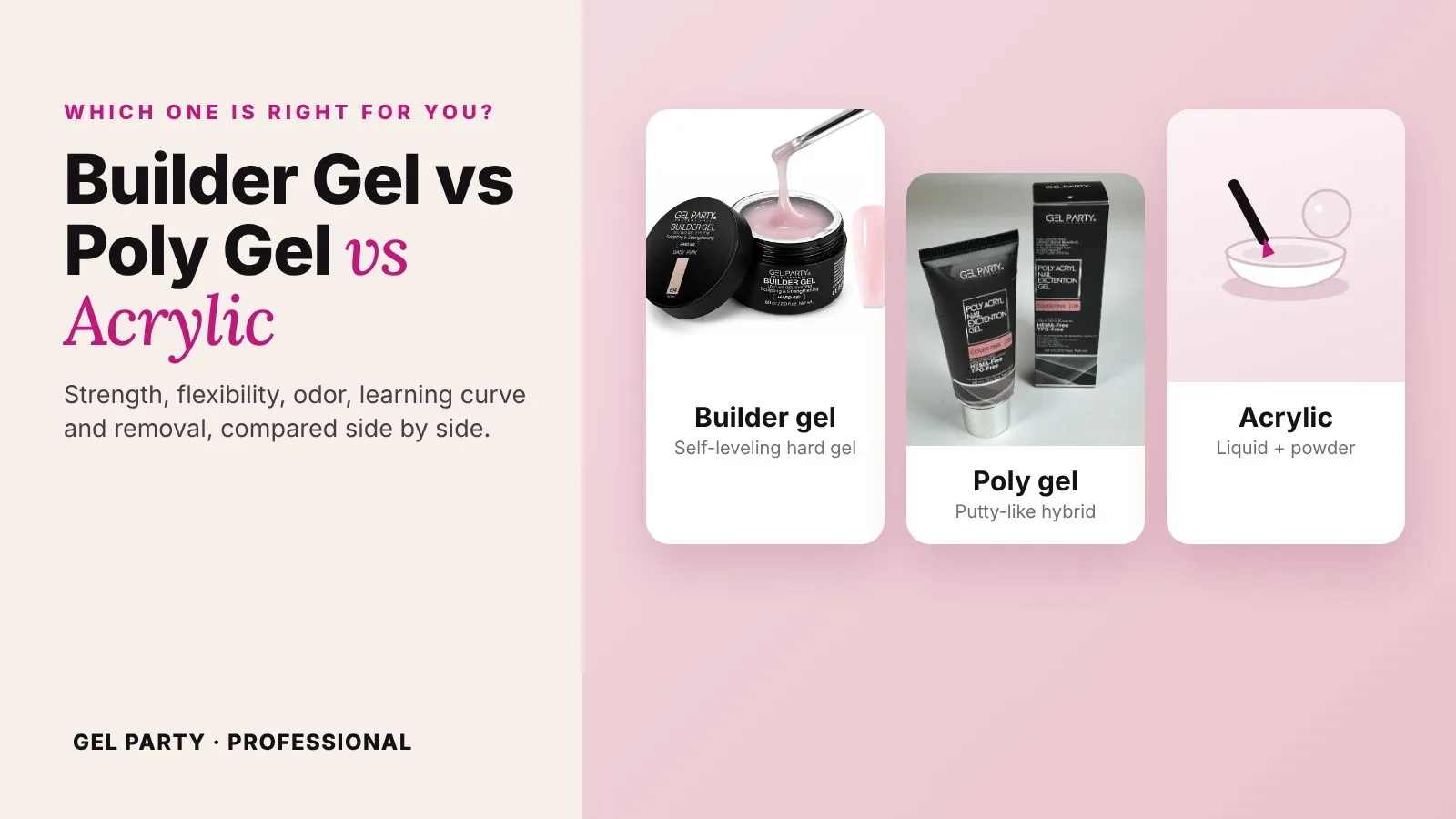
Builder gel, poly gel and acrylic can all give you strong, beautiful nails, but they feel very different to work with and they suit different people. If you have ever stood in front of a nail supply shelf wondering which one to buy, this guide is for you.
Below we compare the three side by side, explain who each one is best for, and answer the questions we hear most often from beginners and nail techs.
The short answer
- Choose builder gel if you want to strengthen your natural nails, do a slim builder-in-a-bottle overlay, or build natural-looking extensions with a glossy, flexible finish.
- Choose poly gel if you are a beginner who wants to sculpt extensions with dual forms and likes a product that stays exactly where you put it.
- Choose acrylic if you are an experienced tech who wants very long, very hard extensions and does not mind the odor and the faster working speed.
What is builder gel?
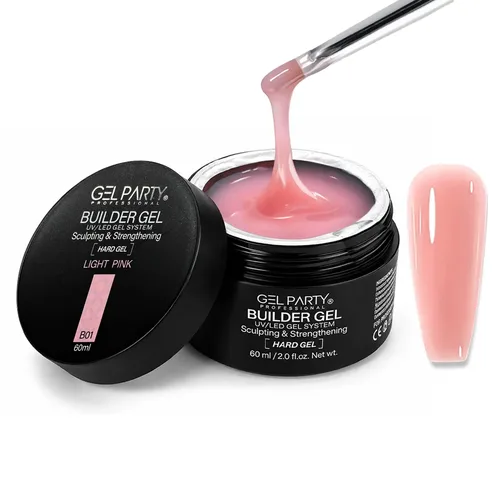
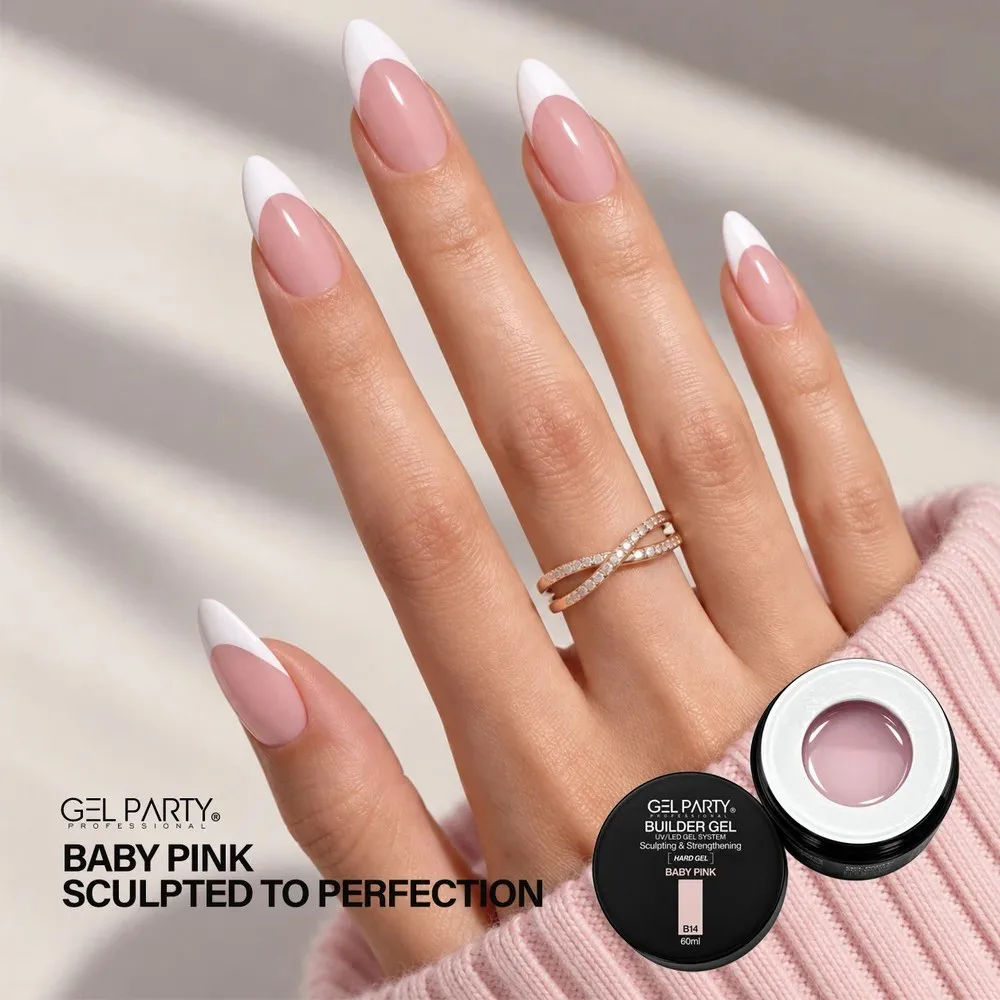
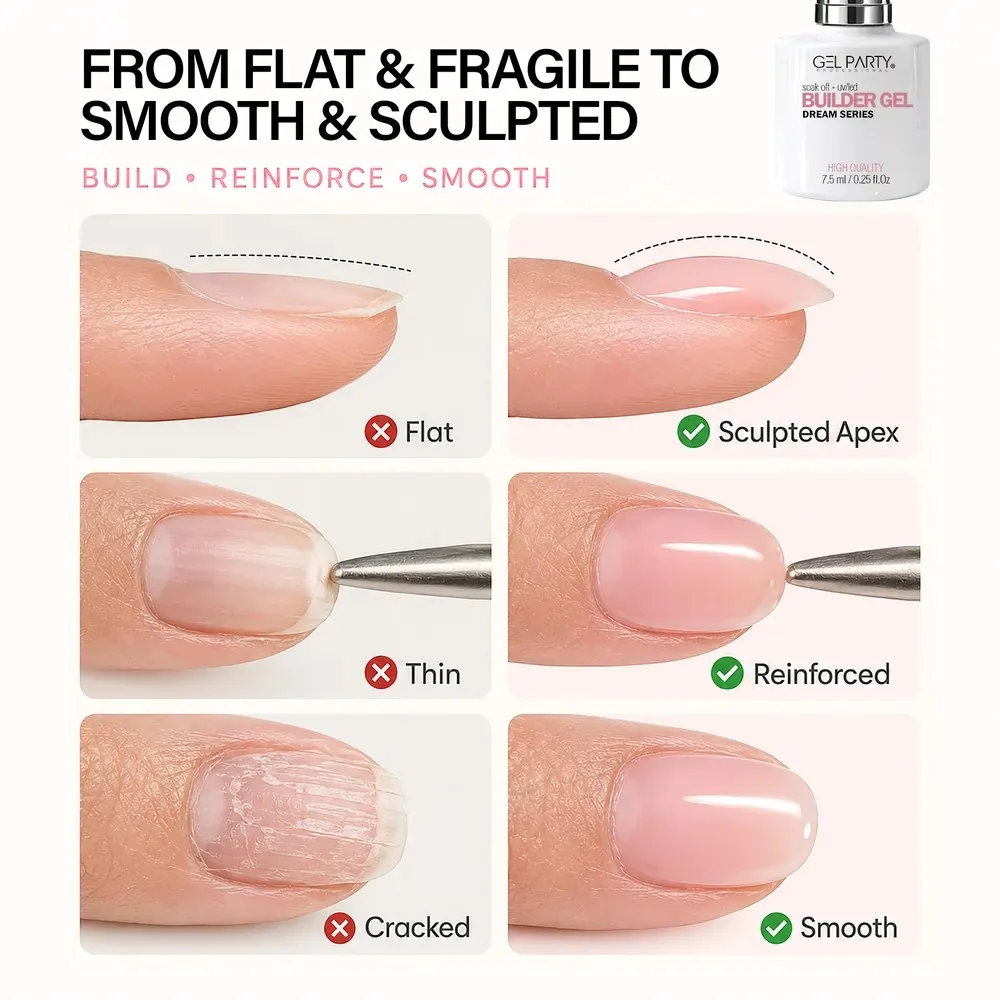
Builder gel is a thick, self-leveling hard gel that cures under a UV/LED lamp. It comes in a jar (applied with a brush) or in a bottle with a built-in brush, often called "builder in a bottle".
Because it self-levels, builder gel flows into a smooth, rounded shape on its own. You place a bead of gel, guide it into position, and gravity helps create a natural curve (the "apex") that makes the nail strong.
Pros
- Strong but slightly flexible, so it is less likely to crack on thin or bendy nails.
- Low odor and unlimited working time until you cure it.
- Ideal for overlays on natural nails and for infills every 3 to 4 weeks.
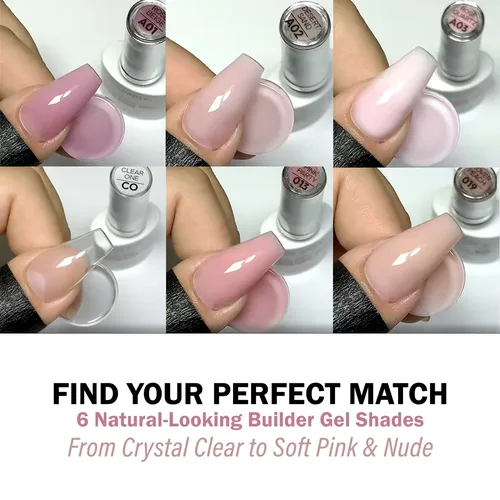
- Comes in sheer nudes, pinks and cover shades, so it can double as your color.
Cons
- Can run toward the cuticles if you use too much or wait too long before curing.
- Most hard gels need to be filed off rather than soaked, so removal takes a little more time.
Builder in a bottle
Builder gel in a bottle is the easiest way to start. You apply it like a thick gel polish, so there is no separate brush to clean and no jar to manage. It is perfect for strengthening short natural nails, fixing small breaks and adding a little structure under your color.
What is poly gel?
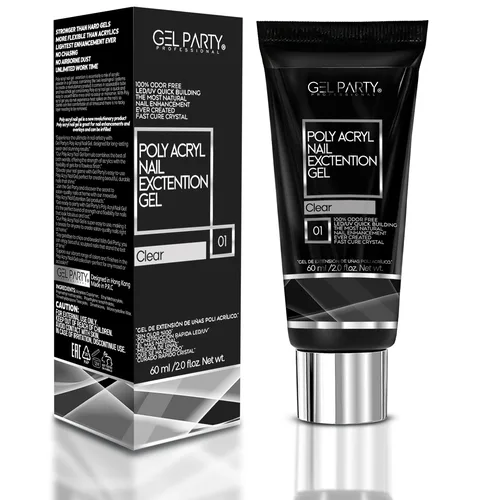
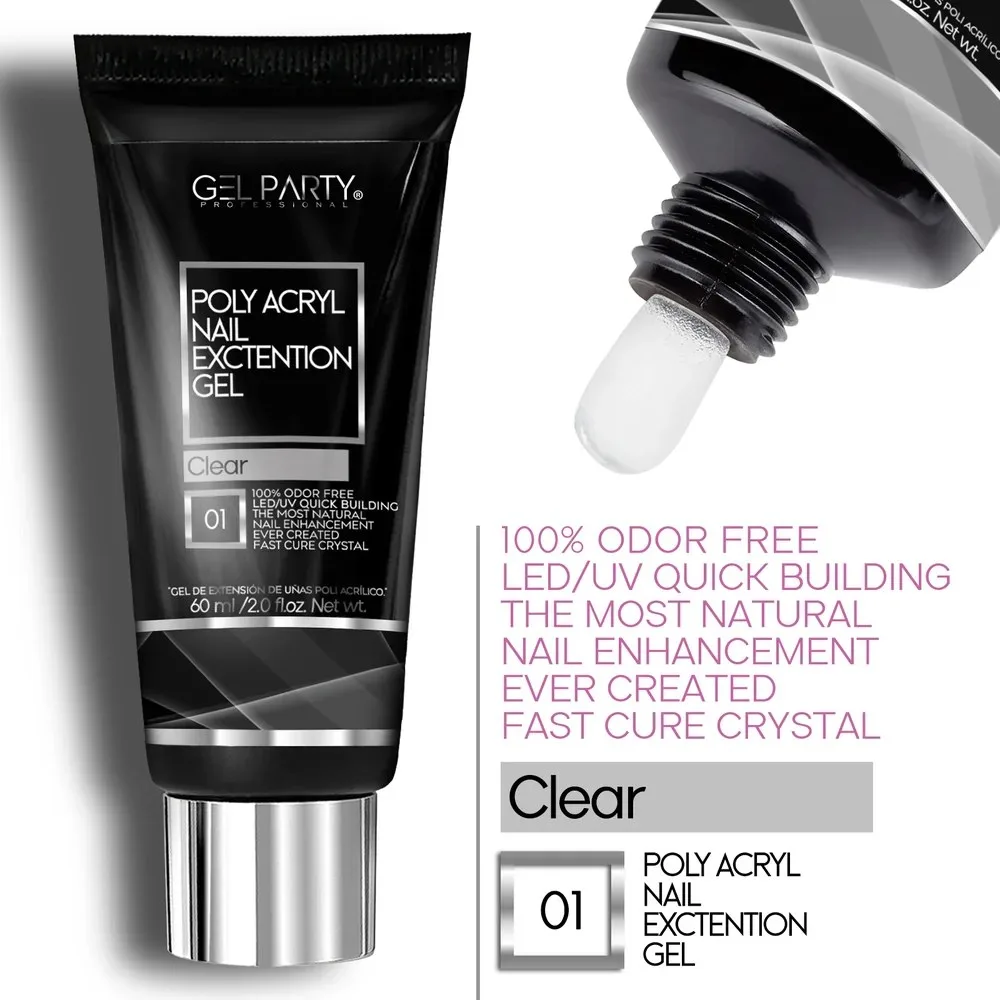
Poly gel (also called polygel, acrylic gel or acryl gel) is a hybrid that combines acrylic powder with gel. It comes in a tube and has a putty-like texture: it does not self-level and it does not run. You shape it with a brush dipped lightly in slip solution, then cure it under a UV/LED lamp.
Pros
- Very beginner-friendly: it stays put, so you can take your time shaping.
- Great with dual forms for quick, even extensions.
- Low odor and no airborne dust while you work.
- Lightweight on the nail once cured.
Cons
- Slightly stiffer than builder gel.
- Too much slip solution weakens it, so it takes a little practice to get the "damp, not wet" brush right.
- Usually removed by filing most of it down and then soaking.
What is acrylic?
Acrylic nails are made by mixing a liquid monomer with a polymer powder. The bead starts to harden as soon as it is made, and the nail cures in the air without a lamp.
Pros
- The hardest and most rigid of the three: excellent for very long or dramatic extensions.
- Fast for experienced techs, and it soaks off in acetone.
Cons
- Strong monomer odor, so good ventilation is essential.
- Short working time makes it difficult for beginners.
- Less flexible, so it can crack under impact rather than bend.
Side-by-side comparison
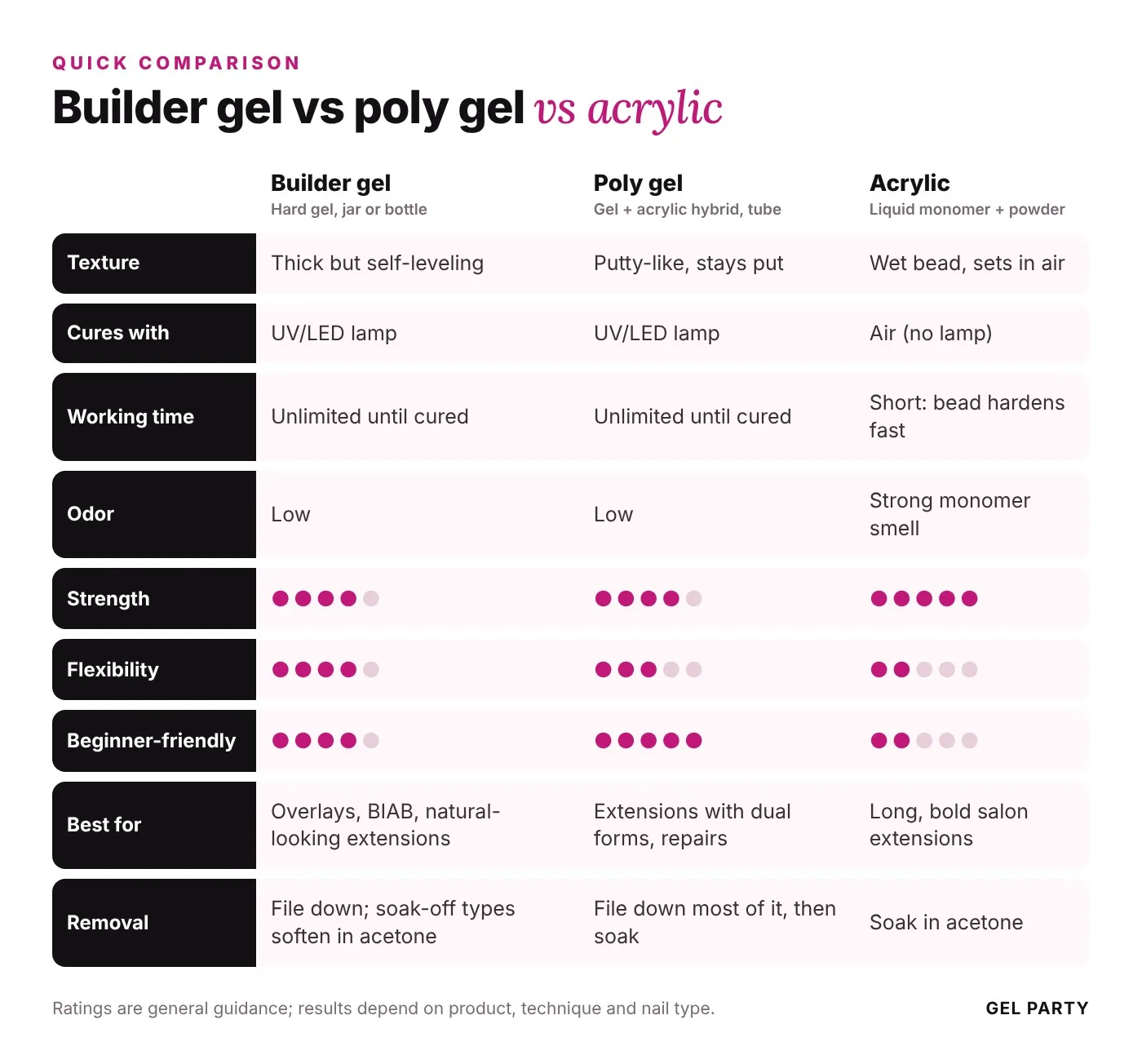
| Builder gel | Poly gel | Acrylic | |
|---|---|---|---|
| Texture | Thick, self-leveling | Putty-like, stays in place | Liquid and powder bead |
| How it cures | UV/LED lamp | UV/LED lamp | Air |
| Working time | Unlimited until cured | Unlimited until cured | Short |
| Odor | Low | Low | Strong |
| Flexibility | High | Medium | Low |
| Easiest for beginners | Overlays and builder in a bottle | Extensions with dual forms | Not recommended |
| Removal | File down (soak-off types soak) | File down, then soak | Soak in acetone |
Which one should you choose?
For stronger natural nails: builder gel. A thin overlay protects weak, peeling or bendy nails so they can grow longer without breaking. Builder in a bottle is the simplest place to start.
For your first extensions: poly gel with dual forms, or soft gel tips with glue gel. Both give you even, symmetrical length without sculpting skills. If you want the fastest option of all, read our guide on how to apply soft gel tips at home.
For long, bold salon extensions: acrylic is still a favorite of experienced techs, but builder gel over forms or tips is a lower-odor alternative many salons now prefer.
Frequently asked questions
Is builder gel better than acrylic?
Neither is better for everyone. Builder gel is more flexible, has almost no smell and is easier to learn. Acrylic is harder and better suited to very long extensions. For most people at home, builder gel is the more comfortable choice.
Is poly gel the same as builder gel?
No. Both cure under a lamp, but builder gel is a self-leveling gel, while poly gel is a gel and acrylic hybrid with a thick, putty-like texture that does not move until cured.
Which is least damaging to natural nails?
The product itself matters less than how it is applied and removed. Gentle prep (only removing the shine), avoiding over-filing, and never peeling or prying product off are what keep natural nails healthy, whichever system you choose.
How long does each one last?
With good prep, all three typically last around three to four weeks before an infill or a new set is needed, depending on how fast your nails grow and how you use your hands.
Do I need a UV/LED lamp?
For builder gel and poly gel, yes. Both must be cured under a UV or LED nail lamp. Acrylic does not need a lamp.
The bottom line
If you want the easiest path to strong, natural-looking nails, start with builder gel or builder in a bottle. If you want to learn extensions, poly gel with dual forms is the most forgiving. And if you are a seasoned tech who loves speed and length, acrylic still has its place.
Whichever you choose, the same rules apply: prep carefully, keep layers thin near the cuticle, cure fully, and remove gently. For step-by-step instructions for every product, see our how-to guides.