Walk into any nail supply aisle, or scroll any nail account for five minutes, and you'll see rubber base, builder in a bottle, hard gel, solid builder, structure gel, and a few names that seem to be invented every month. They all come in pinks and nudes. They all promise "strong, natural nails." It's no wonder clients ask for one by name and techs aren't always sure what's different.
Here's the honest answer: they really are different products, and choosing the right one for the nail in front of you is one of the simplest ways to stop breaks and lifting. This guide explains what each one is, how they compare, and how to choose.
It's all about flexibility
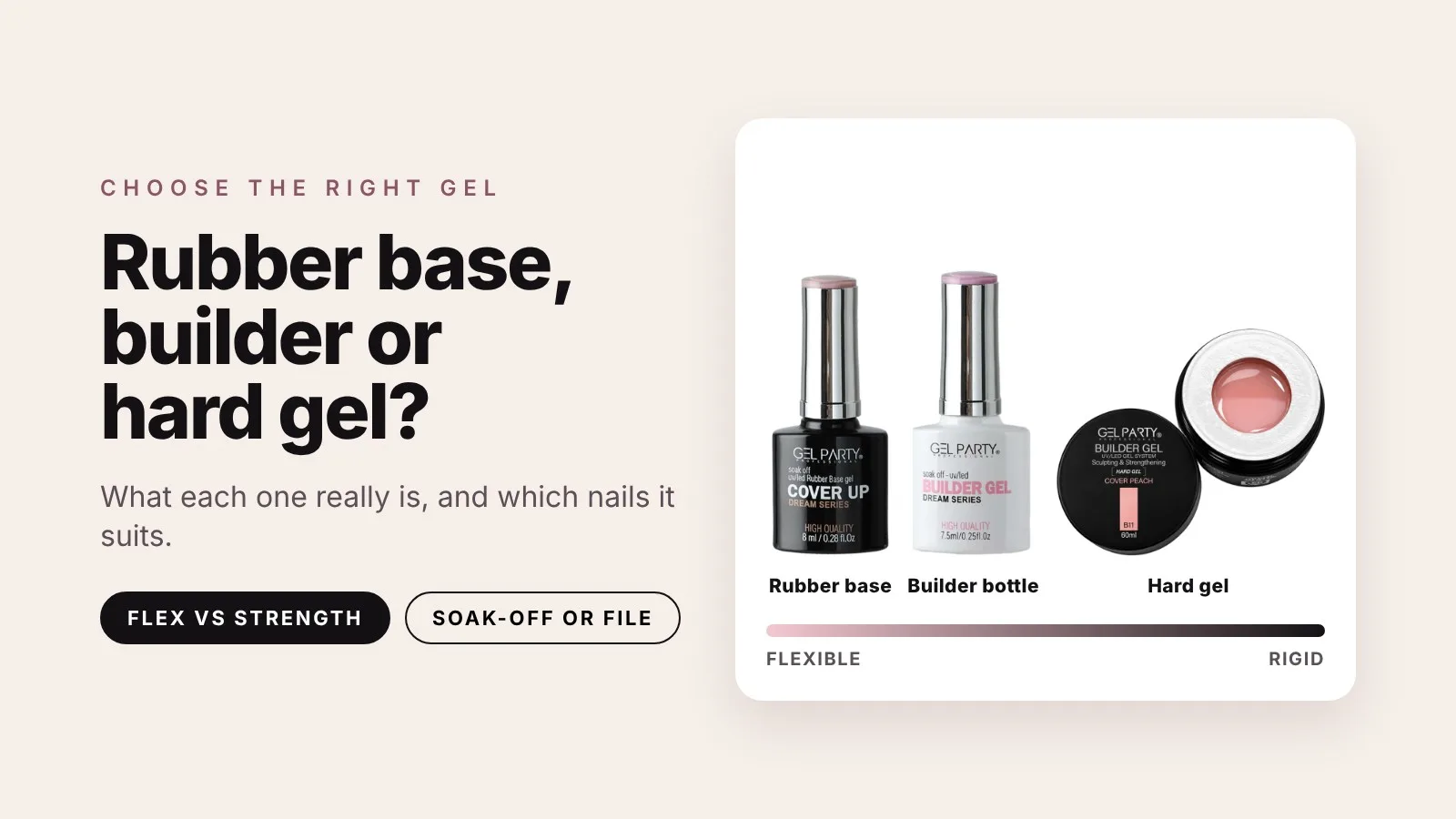
All four are UV/LED gels made from similar families of ingredients. The big difference is how tightly the molecules link together when they cure. Nail educator Kevin Nicholls explains it simply: rubber base uses softer ingredients with fewer cross-links, so it cures into a flexible coating; builder in a bottle sits in the middle; hard gel has the most cross-links and cures into a rigid structure.
That one property decides almost everything else: how much length a gel can hold, how it behaves on a bendy nail, and how it comes off.
Same pressure, different bend
The flex bars are an illustration, not a lab measurement. Flexible gels move with the nail; rigid gels hold their shape and carry length. Photos show the type of nail each gel suits (stock photos via Pexels).
The four gels, one by one
Rubber base
Rubber base is a thicker, flexible base gel that self-levels into a soft curve. It grips well and moves with the nail, which makes it ideal for thin, weak or peeling natural nails at a short length. You can wear the sheer nude and pink shades alone with top coat for a clean, natural look, or use rubber base as a strong base under gel color.
What it isn't: a structure gel for length. Rubber base is too soft to hold an extension or a long free edge. Ask it to, and it bends, cracks or lifts at the tip.
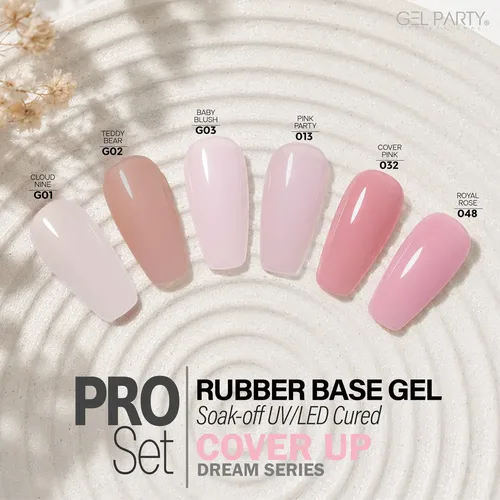
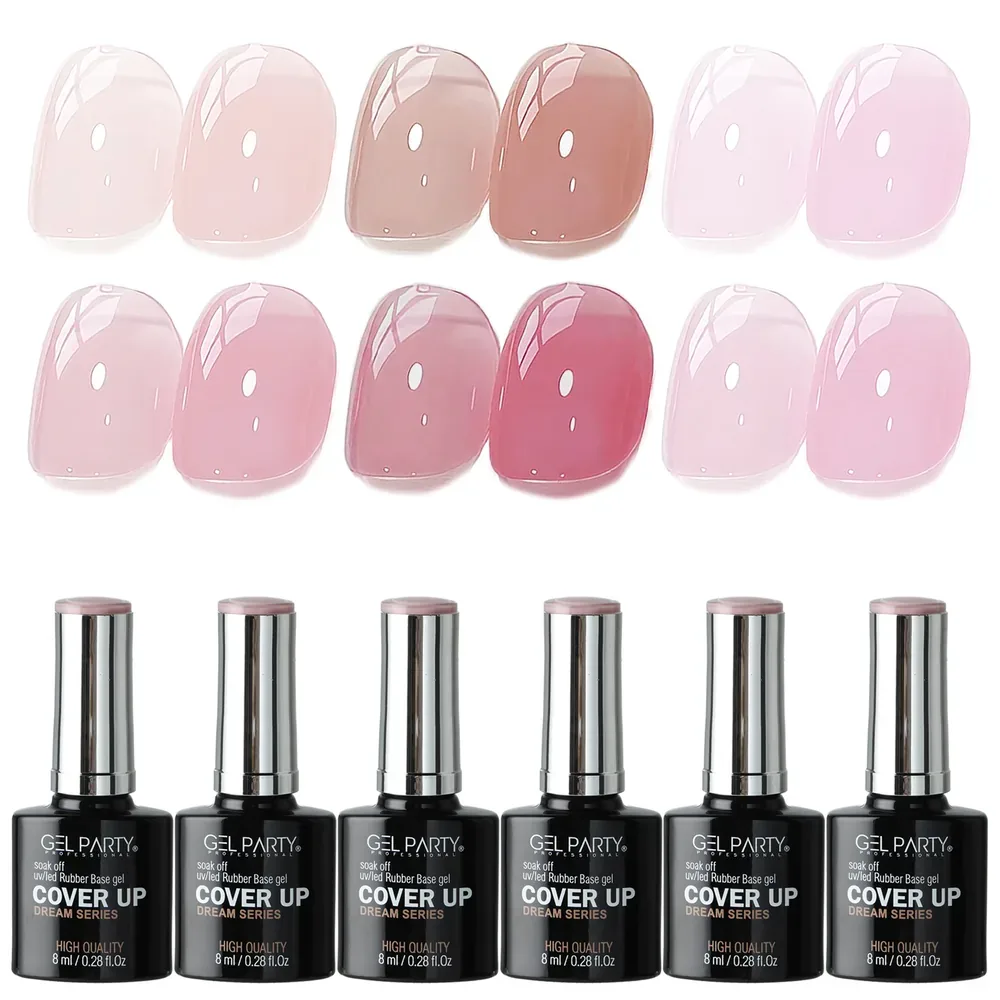
Our Rubber Base Gel, Dream Series comes in five sets of sheer and milky nudes and pinks.
Builder gel in a bottle
Builder in a bottle sits between rubber base and hard gel. It has more strength than rubber base, still has some flex, and comes with a brush, so it's fast to apply. Nicholls describes it as a reinforced rubber base, best for strengthening natural nails and very short extensions of 1 to 2 mm.
It's the go-to for the "natural nail, but stronger" client: someone whose nails break at the tip, who wants a slim, natural overlay and maybe a little more length than they can grow on their own.
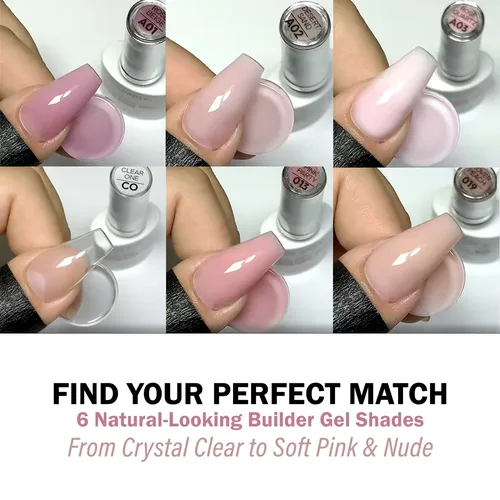
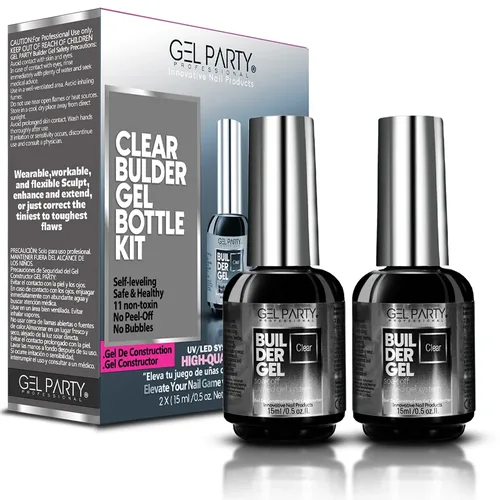
Our Builder Gel in a Bottle, PRO Dream Series comes in sets of sheer, milky and cover shades, and there's a Clear Builder Gel in a Bottle for layering over any color.
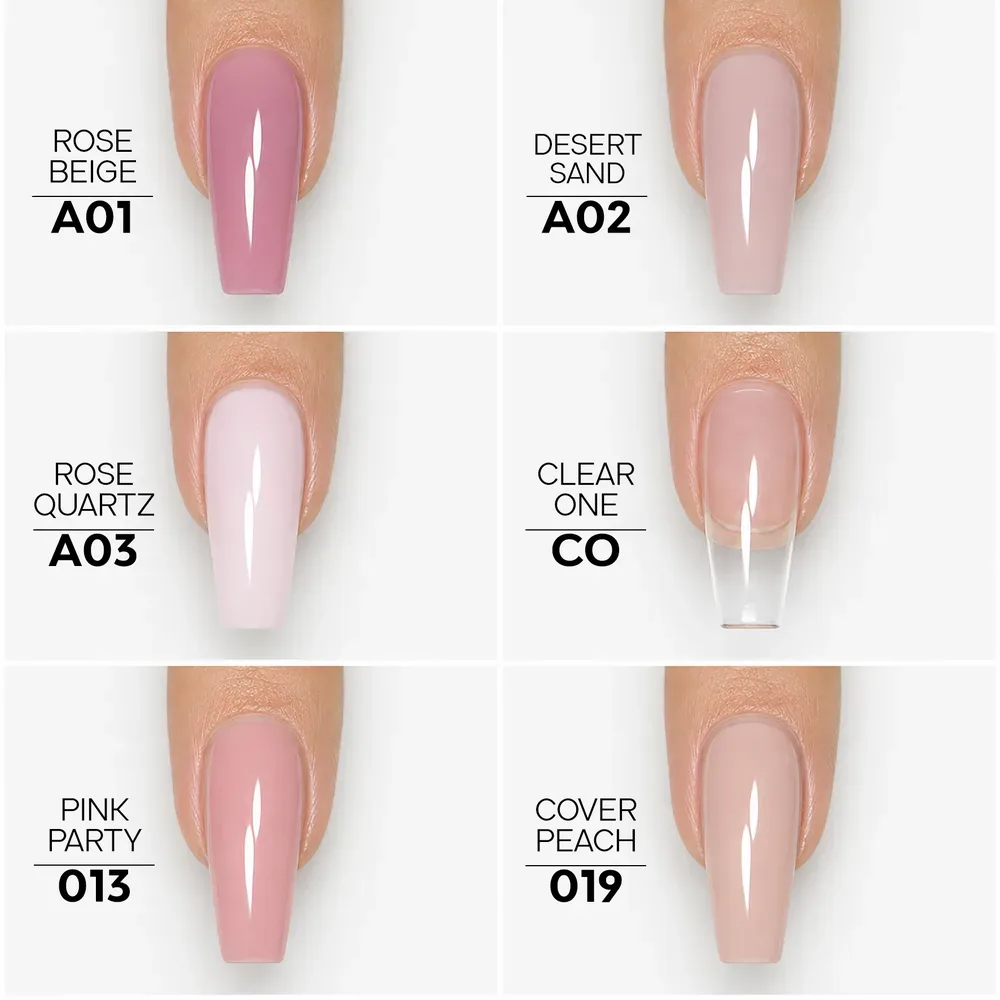
Hard builder gel (jar)
Hard builder gel is the most rigid of the four. It's thicker, sits in a jar and is applied with a gel brush. Because it's rigid, it can hold a strong apex and real length on tips or forms without bending. This is the gel for structured overlays, sculpted extensions and clients who are hard on their nails.
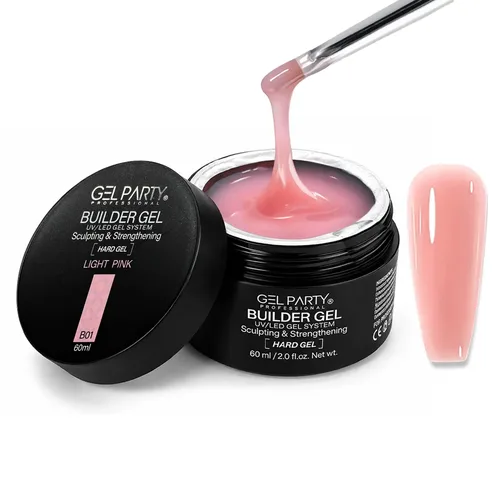
A note on removal. "Hard gel" means two things in the nail world. Traditional hard gels don't soak off at all and must be filed off. Many modern builder gels in jars, including our Builder Gel, are soak-off formulas: you file off most of the product, then soak off the rest with remover. Always check the label of the gel you're using.
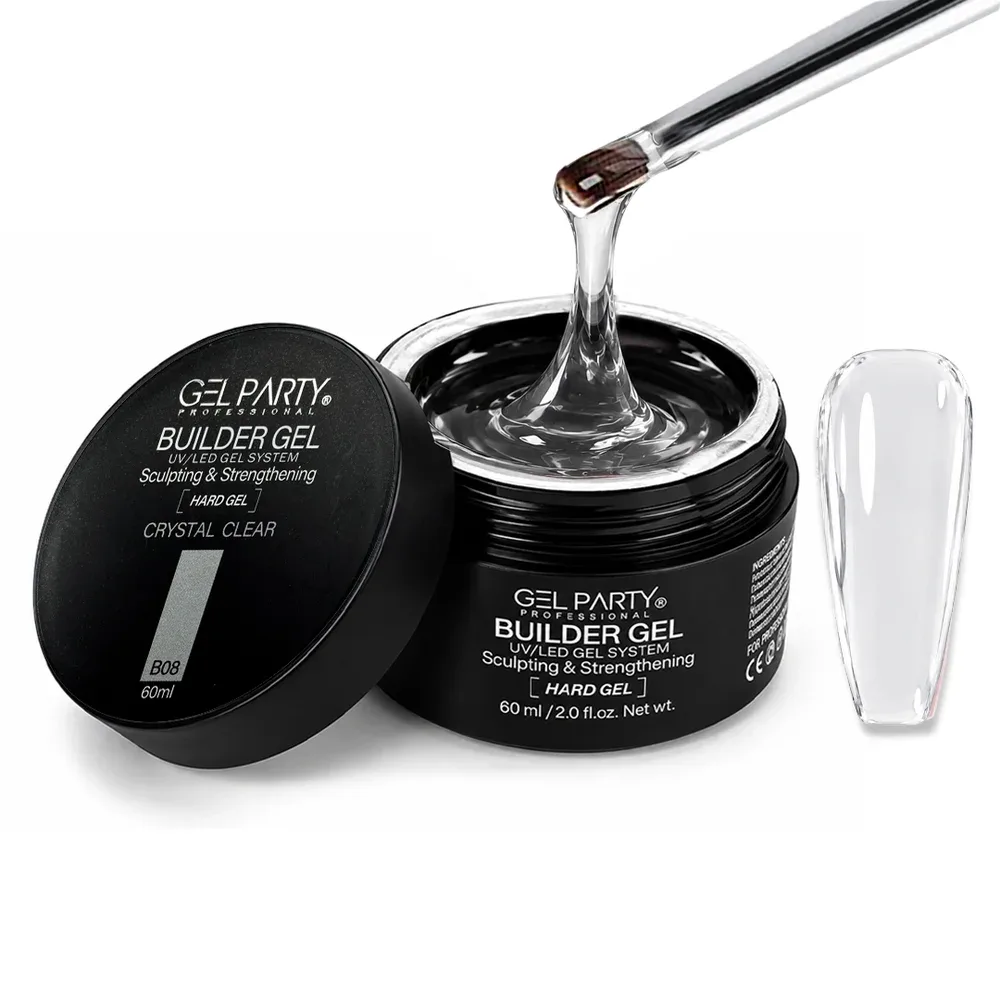
Solid builder gel
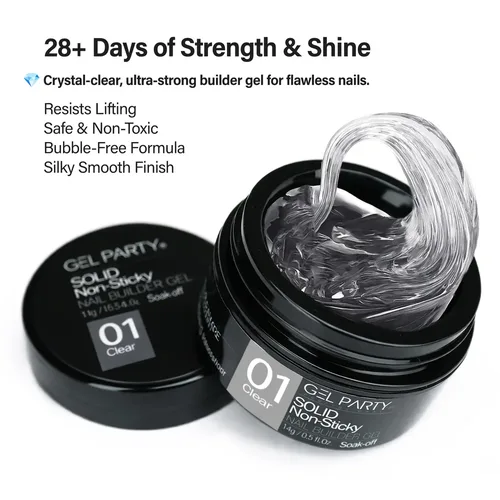
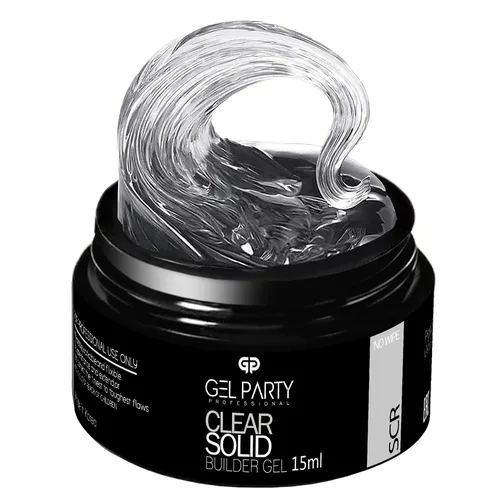
Solid builder gel is the newest of the group. It has a firm, putty-like texture that doesn't move until you cure it. You scoop it with a spatula, place it and press it into shape. Nothing runs into the cuticles, and nothing strings off the brush.
It's brilliant for sculpting on soft gel tips or dual forms, fixing a break, setting rhinestones and carving 3D art. Our 3D Solid Builder Gel and Non-Stick Solid Builder Gel both work this way.
Side by side
| Rubber base | Builder in a bottle | Hard builder gel | Solid builder gel | |
|---|---|---|---|---|
| Texture | Medium-thick, self-leveling | Medium, self-leveling, brush in the bottle | Thick, self-leveling, applied from a jar | Firm putty, doesn't flow |
| Flexibility | Very flexible | Semi-flexible | Rigid | Firm once cured |
| Best for | Short natural nails, thin and weak nails, base under color | Strengthening natural nails, very short length | Structured overlays, apex, extensions on tips or forms | Sculpting, extensions on tips or forms, repairs, 3D art |
| Holds length? | No | A little (1 to 2 mm) | Yes | Yes |
| Wear alone? | Yes, sheer shades with top coat | Yes, with top coat | Yes, with top coat | Usually with color or top coat |
| Removal | Soak off | Soak off | Traditional hard gel: file off. Soak-off builders: file down, then soak | File down, follow the label |
| Learning curve | Easiest | Easy | Needs practice with the apex | Easy to place, needs practice to sculpt |
How to choose: start with the client, not the bottle
Match the gel to the nail
Rubber base
Natural nails that peel or bend, worn short. Flex keeps the gel attached as the nail moves.
Builder in a bottle
Healthy nails that snap at the tip, or clients who want a slim overlay and a little more length.
Hard builder gel
Extensions, long natural nails, clients who are hard on their hands. Needs a proper apex.
Solid builder gel
Extensions on tips or forms, repairs, rhinestones and 3D designs without any running.
When in doubt, think about length. The longer the free edge, the more rigid the gel needs to be.
A few practical rules most techs learn the hard way:
- Length decides first. If the client wants length beyond the fingertip, rubber base is out. Use hard builder gel or solid builder on a tip or form.
- Very bendy nails need some flex. A rigid gel on a very thin, flexible nail can lose grip as the nail moves under it. Start with rubber base or builder in a bottle at a short length, and build up strength over a few appointments.
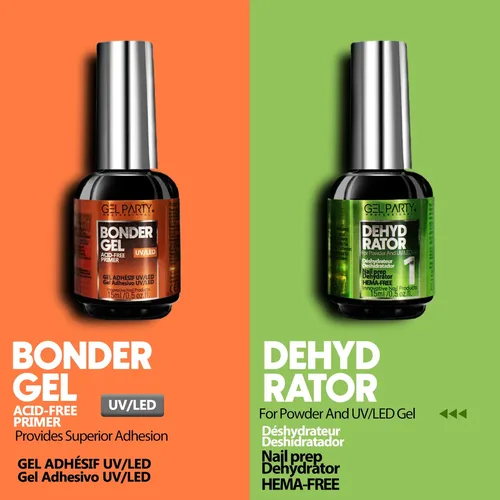
- You can combine them. A thin rubber base or bonder layer for grip, then builder for structure, is a common salon method. Stay within one system where you can, and follow each product's cure times.
- Prep doesn't change. Whatever you choose, the base of a lasting set is the same: clean prep, a dehydrator, thin layers and full curing. Our guide to why builder gel lifts covers this step by step.
How to apply each one (the quick version)
Rubber base: prep and dehydrate, scrub a very thin layer into the nail and cure. Apply a second, thicker layer, place a bead in the center, guide it toward the sidewalls and free edge, let it self-level and cure. Wear alone with top coat or add gel color.
Builder in a bottle: prep and dehydrate, brush on a very thin base layer and cure. Place a bead in the center, guide it toward the sidewalls and free edge, keeping 1 mm from the skin. Turn the finger upside down for 5 to 10 seconds so it forms a smooth apex, then cure.
Hard builder gel: prep, dehydrate and apply a bonder or thin base, then cure. Pick up a bead with the brush, twisting as you lift so it doesn't string. Float it from the center toward the edges and build the apex about a third of the way down from the cuticle. Cure, wipe, then file and refine.
Solid builder gel: prep and base as usual. Scoop a small amount with a spatula, place it on the nail or tip and press it into shape, thin at the cuticle and thickest at the apex. Cure fully, then file and finish.
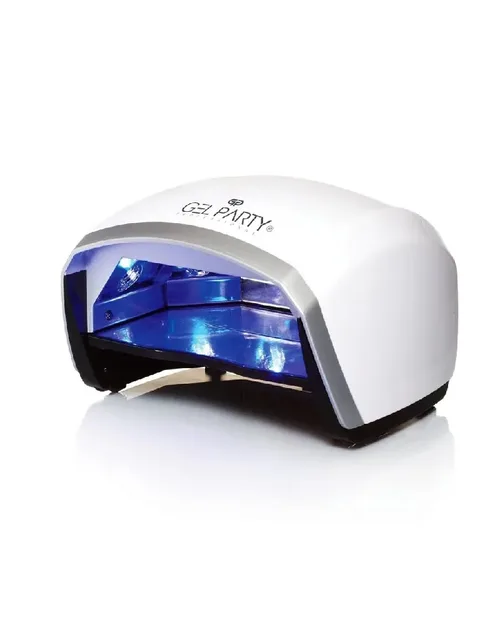
Cure times depend on your lamp. As a guide, our gels cure in about 60 seconds in an LED lamp or 120 seconds in a UV lamp. Always follow your lamp's instructions, and cure thicker layers in two thinner passes.
Frequently asked questions
Is rubber base the same as builder gel?
No. Rubber base is more flexible and is designed for thin layers on natural nails. Builder gel is stronger and more rigid, so it can hold an apex and length. Builder in a bottle sits in between.
Can I use rubber base for nail extensions?
It's not a good idea. Rubber base is too flexible to support length, so an extension built with it will bend, crack or lift at the tip. Use hard builder gel or solid builder gel on a tip or form.
Which lasts longer, rubber base or builder gel?
On short natural nails, both can last well with good prep. On longer nails or clients who are hard on their hands, builder gel lasts longer because it holds its shape. Choosing the right product for the nail matters more than the product name.
Can I wear builder gel without color?
Yes. Sheer, milky and cover shades of rubber base and builder gel are made to be worn alone with a top coat.
Do I need a base coat under builder gel?
Use a dehydrator and a bonder or thin base first for the best adhesion. Builder in a bottle can be scrubbed in as its own thin first layer.
Can you soak off hard gel?
Traditional hard gels can't be soaked off and must be filed. Many builder gels sold in jars today are soak-off: file off most of the product, then soak off the rest. Check the label of your gel.
The bottom line
Rubber base, builder in a bottle and hard gel aren't competitors. They're tools for different nails. Short and bendy: rubber base. Natural but breaking: builder in a bottle. Length and structure: hard builder gel. Sculpting and art: solid builder. Choose by the nail in front of you and the length the client wants, and most of the breaks and lifts you've been fighting will disappear.
Sources
- Kevin Nicholls, NailKnowledge. The truth behind rubber base and BIAB: marketing vs chemistry (cross-linking, flexibility, soak-off and intended uses of rubber base, builder in a bottle and hard gel). 14 November 2025.
- Kevin Nicholls, NailKnowledge. UV curing: why thin layers matter for perfect nails (thin, fully cured layers; lamp matching). 17 August 2025.
- Doug Schoon, NailKnowledge. Oily nail plates and proper nail coating application (preparation and application as the main factors in adhesion). 7 August 2024.
- GEL PARTY product information: Rubber Base Gel, Builder Gel in a Bottle, Builder Gel, 3D Solid Builder Gel (application steps, removal and cure times).