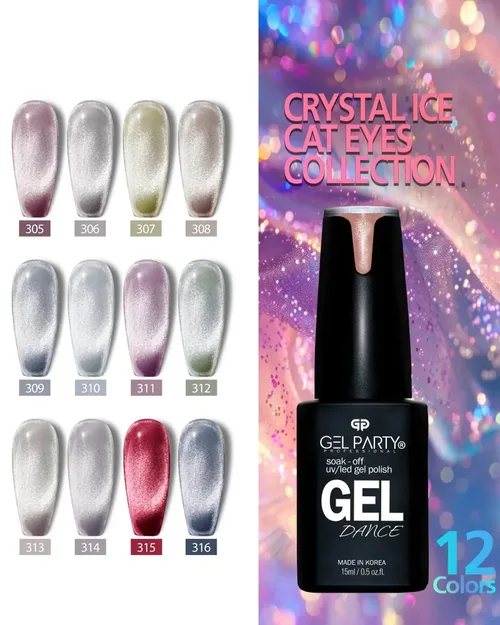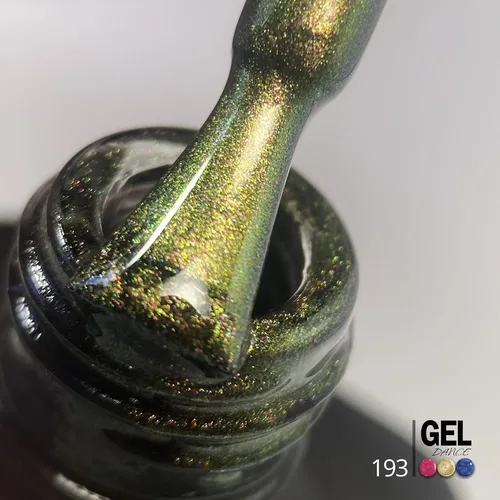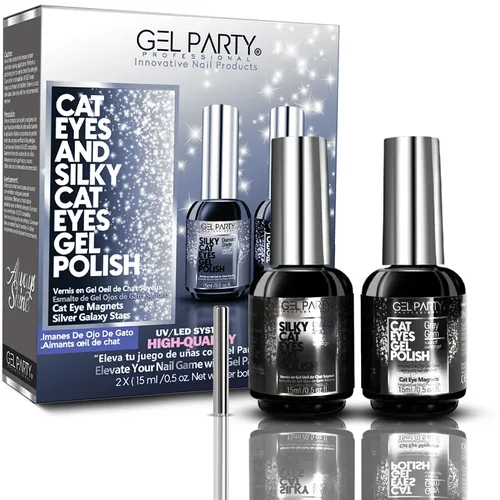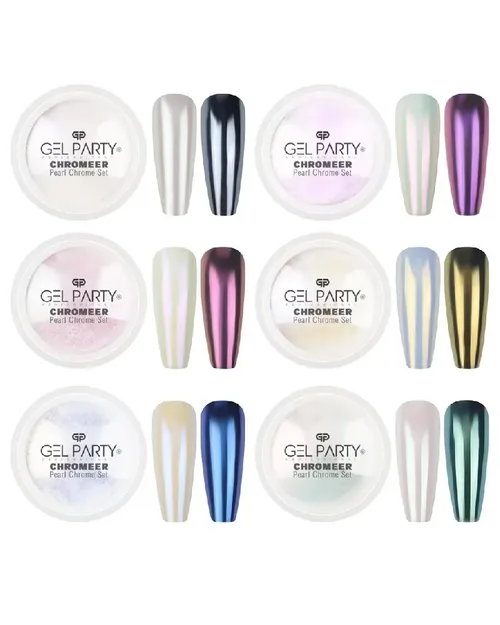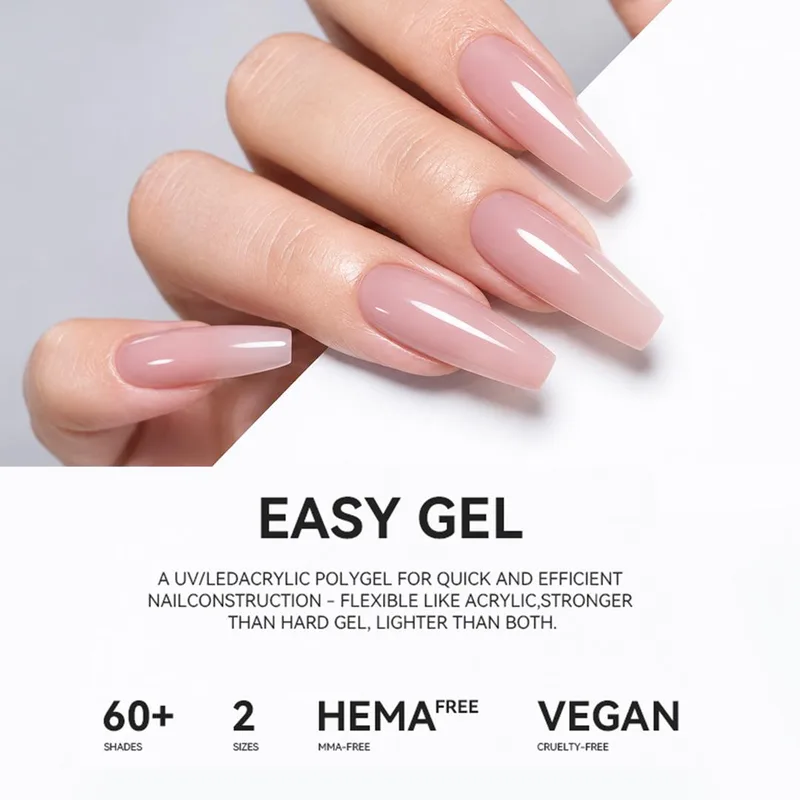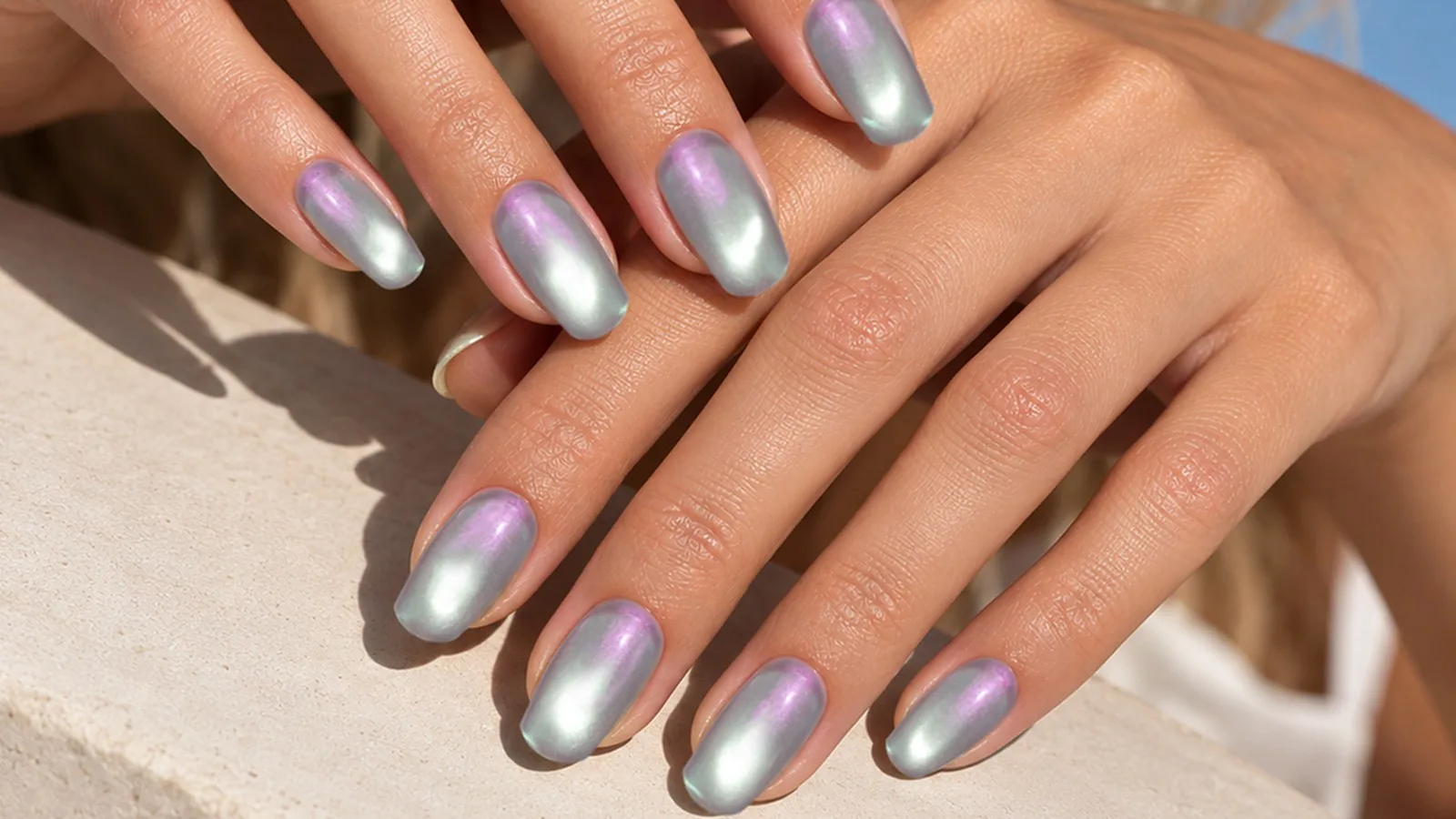
Cat eye and chrome get lumped together all the time, and it's easy to see why. Both make a nail look like it's lit from inside, both photograph like nothing else, and both send clients home tilting their hands under every lamp they pass. But they're opposite techniques. Cat eye happens while the gel is still wet, with a magnet. Chrome happens after everything is cured, with a sponge and a little pressure. Get the order wrong and neither one works.
This is the main guide to the whole shimmer family. It explains how each effect works, how to choose a base color, the step-by-step for each technique, how to layer them together, and how to keep the finish on the nail for the full wear time. Where a topic deserves more room, we link to the in-depth article.
Cat eye vs chrome in one minute
If you only remember one thing from this guide, make it this table. Almost every problem with these effects comes from treating one like the other.
| Cat eye | Chrome | |
|---|---|---|
| What it is | Gel polish with magnetic particles inside | A dry powder of very fine reflective flakes |
| When you work it | While the gel is wet, before curing | After the top coat is fully cured |
| Tool | A magnet, held just above the nail | A sponge applicator or silicone tool, pressed and rubbed |
| What you see | A band or glow of light that seems to move as the hand tilts | A smooth, even metallic, pearl or holographic surface |
| Where it fails | Thick coats, a delay before curing, an unshaken bottle | A wiped, dusty or sticky surface, too much powder, an uncapped edge |
| How it's sealed | Top coat over the cured cat eye | Cap the free edge, then top coat over the powder |
| Removal | Soak-off, like any gel polish | Soaks off with the gel underneath once the top coat is filed |
How cat eye works
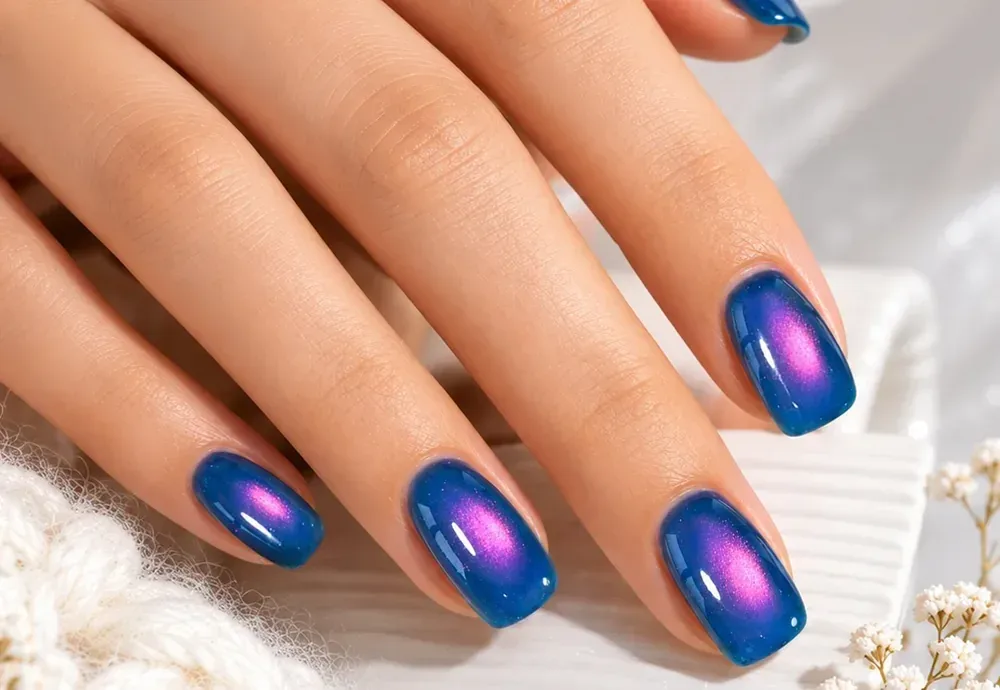
Cat eye gel holds tiny iron oxide particles. NailKnowledge describes them as metallic and elongated, and they respond to a magnetic field. Without a magnet, they sit in every direction and the gel just looks like a fine shimmer. Bring a magnet close, and the particles turn and line up along the field. Lined up, they reflect light together as a bright band.
The distance controls the shape of that band. In NailKnowledge's words, move the magnet closer and the band becomes sharper and more intense; pull it further away and it softens into a broader, more diffused glow. Curing locks the particles in place for good.
That's the whole technique in a sentence: the magnet arranges the particles, and the lamp freezes the arrangement. Everything else (line, diagonal, velvet, halo, French) is just a different magnet position. Our cat eye nails guide walks through the three core magnet moves step by step.
How chrome works
Chrome powder is the opposite: it doesn't move on its own at all. It's a powder of extremely thin, flat flakes. Rubbed over a smooth surface, they lie down flat and overlap, so the nail reflects light as one sheet instead of millions of separate sparkles. That's why the surface underneath matters so much. If the top coat is wiped, scratched or tacky, the flakes can't lie flat and the finish turns grainy.
Pearl, aurora and "glazed" powders add a second trick. Pearlescent pigments are typically thin, transparent platelets (often mica) coated with a metal oxide such as titanium dioxide. As the paint and pigment supplier Natural Pigments explains, light reflects at each layer, and the reflections interfere with each other to produce color. The thickness of the coating decides which color you see, and the color shifts as the viewing angle changes. That's the "aurora" effect: not a dye, but light.
Two ways to make light
Both effects drawn on a real nail photo. Cat eye is shaped before curing; chrome is applied after curing. That single difference decides the order of every combined look.
The shimmer family: which look is which
Trend names change every season, but they all come back to a handful of techniques. Here's how the names you hear from clients map onto what you actually do.
| Look | Technique | Typical base | Go deeper |
|---|---|---|---|
| Classic line cat eye | Magnet flat above the center | Black or same-tone color | Cat eye magnet techniques |
| Diagonal flash | Magnet angled from one corner | Black, dark red, jewel tones | Cat eye magnet techniques |
| Velvet cat eye | Magnet farther away and moving | Black or pale nude | Cat eye magnet techniques |
| 9D / multichrome cat eye | Cat eye gel with color-shifting particles | Black for the strongest shift | This guide |
| Aurora cat eye | Iridescent cat eye, often over a sheer base | Clear, sheer pink or white | Aurora and dark red cat eye nails |
| Glazed / pearl chrome | Pearl powder over cured top coat | Milky white or sheer nude | Chrome nails guide |
| Mirror chrome | Mirror powder rubbed to full shine | Black | Chrome nails guide |
| Holographic chrome | Rainbow powder over cured top coat | Black or white | Chrome nails guide |
| Cat eye chrome | Cat eye, cure, no-wipe top coat, then chrome on top | Any | This guide |
| Milky chrome French | Chrome over a milky base, tip detail | Milky white | Milky French nails |
Four looks, one family
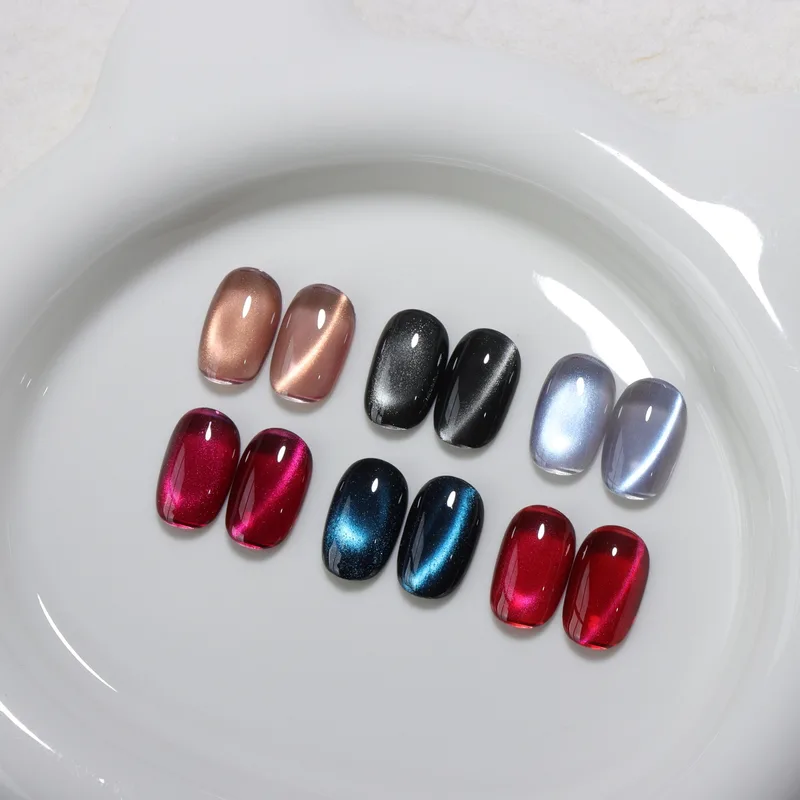
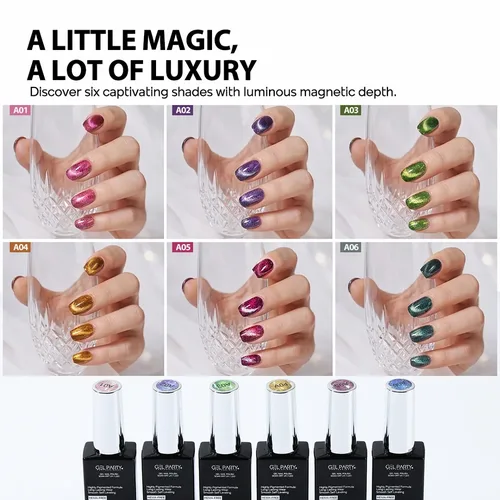
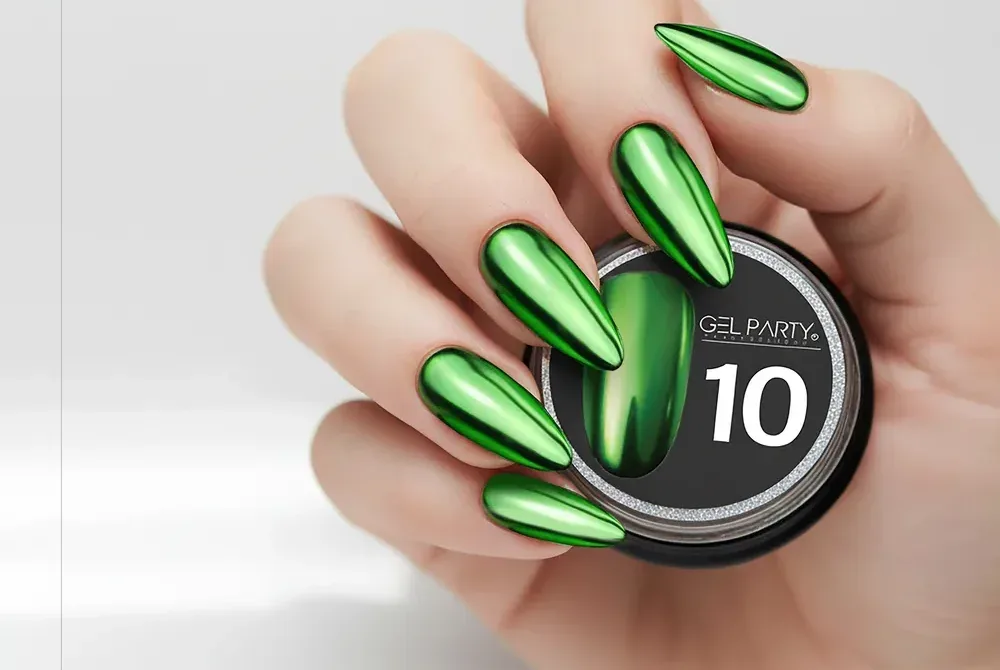
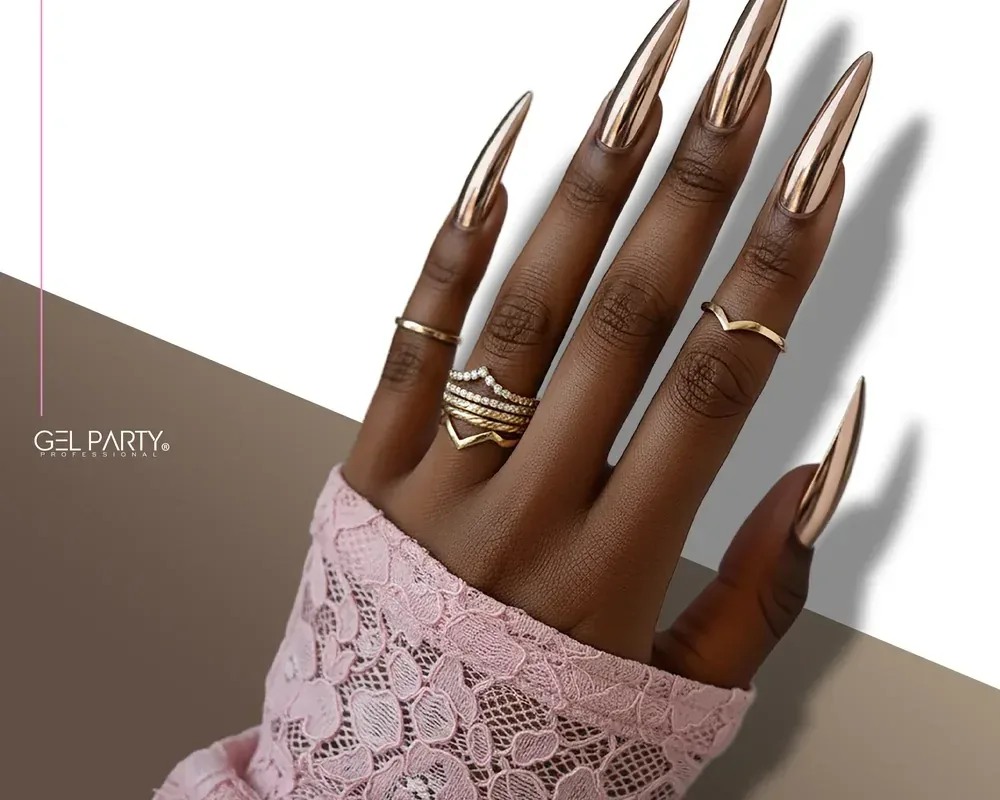
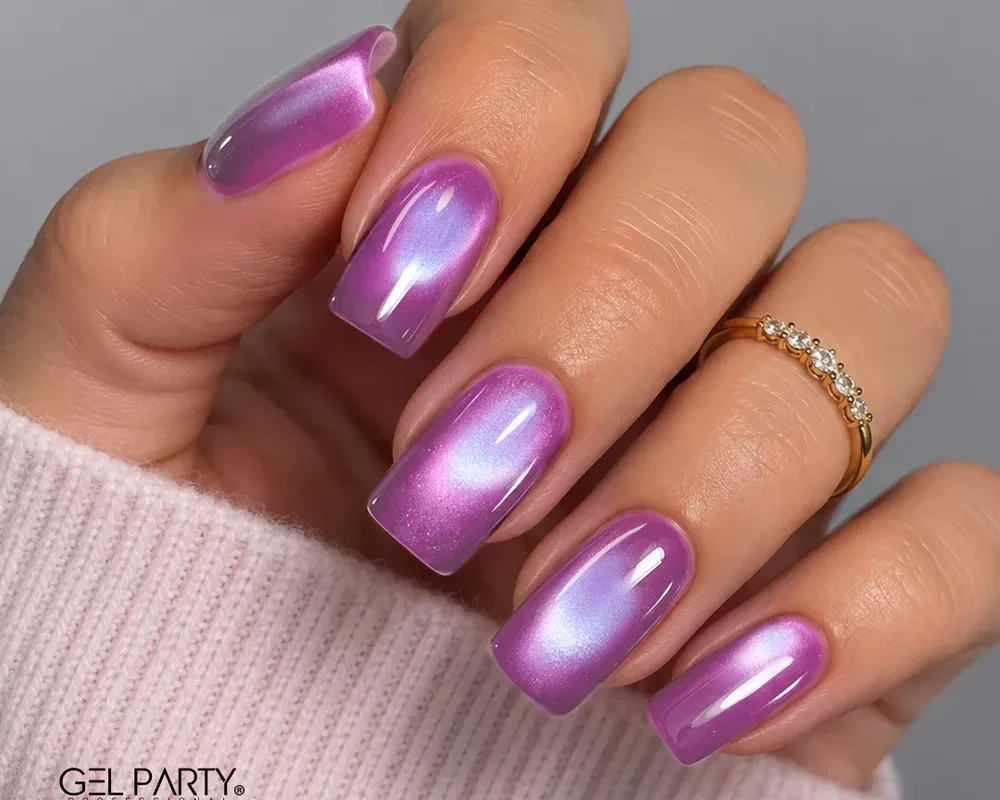
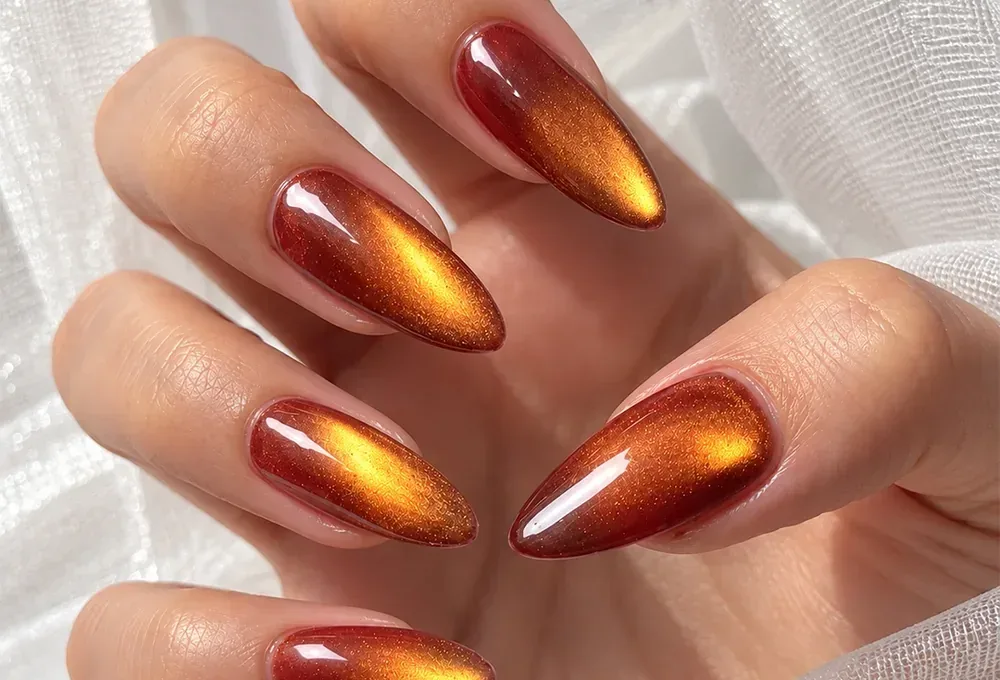
Real GEL PARTY manicures: PRO Cat Eye shades on top, Chrome Nail Powder below. The light sweep shows how each finish catches a moving light.
Base color: the decision that changes everything
Both effects are partly transparent, so whatever sits underneath shows through. Clients often ask for "that exact color" from a photo, and nine times out of ten the difference between their result and the photo is the base, not the product.
NailKnowledge puts the cat eye side of it simply: dark bases create maximum contrast with the lighter reflective streak. A navy or forest green base, they add, makes a gold or silver streak appear to almost float above the surface. The same logic applies to chrome: mirror powders look deepest over black, pearl and aurora powders look brightest over white, and a milky or sheer base turns them into a soft glaze.
| Base | Cat eye result | Chrome result | Best for |
|---|---|---|---|
| Black | Highest contrast, the band looks like it floats | Deepest, truest mirror | Holiday, evening, "precious metal" sets |
| Same color as the cat eye | Rich, even depth with no dark edges | Tinted metallic | Wine, emerald, navy sets |
| White | Icy, pastel, opal | Bright pearl and aurora | Bridal, winter, ice aurora |
| Sheer pink or nude | Soft, glassy, natural | Glazed, "clean girl" glow | Everyday, short nails, offices |
| Clear (no color) | Jelly, see-through aurora | Very sheer, uneven unless the nail is perfect | Aurora, layered art |
A tip that saves a lot of redos: keep two swatch sticks for every cat eye shade you stock, one over black and one over white or sheer pink. Clients choose faster when they can see both, and you never promise a look the bottle can't give.
The cat eye method, step by step
This is the base routine that every cat eye look starts from. The full magnet techniques article covers the line, diagonal and velvet moves in detail.
- Prep and base. Push back the cuticle, remove non-living tissue, lightly buff the shine off, dust and cleanse. Apply a thin base coat, cap the free edge and cure.
- Background color (optional). Black for contrast, nude for softness, or the same tone as the cat eye for depth. Cure.
- Shake the bottle. The magnetic particles settle. If you skip this, the effect is weak and uneven, and you'll blame the magnet.
- One thin coat of cat eye. Cap the free edge. Don't cure.
- Magnet. Hold it about 3 to 5 mm above the wet gel for 5 to 10 seconds. Never touch the gel.
- Cure immediately. About 60 seconds in an LED lamp or about 120 seconds in UV for our cat eye gels, but always follow the time for your lamp.
- Second coat, magnet again, cure. The second coat is where the depth comes from.
- Top coat (glossy or matte) and cure.
Work one nail at a time. If you paint five nails and then go back with the magnet, the last ones have already started to settle and the line will be blurry.
Magnetic powder: the dry version of cat eye
There's also a powder version of the effect. NailKnowledge describes burnishing a superfine magnetic powder onto the nail and then using a magnet to draw the light into position. The idea is the same (particles that respond to a magnet), but you work it over a surface instead of inside wet gel. Follow the specific instructions for whichever powder you use, because the order of steps differs between products.
The chrome method, step by step
The full article on chrome nails shows glazed, pearl and mirror chrome with photos of each stage. The core routine:
- Prep, base and color, curing each layer. Black for a strong mirror, white for pearl, milky or nude for a glaze.
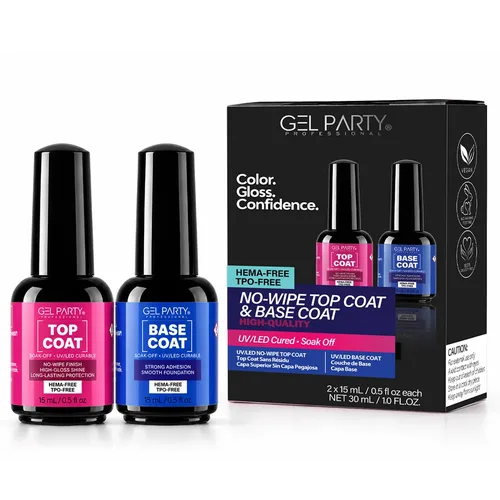
- No-wipe top coat. One thin, even layer, fully cured. Don't wipe it and don't touch it.
- Rub in the powder. Pick up a very small amount with the sponge applicator and rub firmly over the whole nail until it shines. Our product notes suggest applying chrome while the nail is still warm from the lamp for a brighter finish.
- Brush off the excess with a soft, fluffy brush, and clean the skin around the nail.
- Cap the free edge with top coat first. This is the step that stops chrome chipping at the tips.
- Seal with a full layer of top coat and cure. Two thin layers wear better than one thick one.
Use one sponge per color so shades stay clean, and close jars right after use. Chrome powder travels.

Combining cat eye and chrome
This is where the two families meet, and where a lot of the most-saved designs come from. Marie Claire UK describes "cat eye chrome" as cat eye polish with chrome powder over the top, and a matte version (cat eye and chrome finished with a matte top coat) that leaves a texture that "almost doesn't look real." Celebrity manicurist Julie Kandalec told Bustle that aurora nails are made by combining chrome powders, mylar films and magnetic cat-eye polishes, adding that "combining techniques and getting creative is the fun part about chrome powders and cat-eye."
The rule that makes every combination work: cat eye is shaped wet, chrome is applied dry, so cat eye always goes first. You can't magnetize anything under a layer of chrome, and you can't rub chrome onto wet gel.
Layer order for cat eye chrome
- 1. Prep and baseThin base coat, free edge capped, cured.
- 2. Cat eye, coat oneThin coat, magnet for 5 to 10 seconds, cure right away.
- 3. Cat eye, coat twoSame magnet position, cure right away.
- 4. No-wipe top coatOne thin layer, fully cured, not wiped. This is the surface the chrome grips.
- 5. Chrome powderA tiny amount of pearl or aurora powder, rubbed or lightly buffed on. Brush off the excess.
- 6. Cap and sealCap the free edge, then a full top coat (glossy or matte). Cure.
Sheer pearl and aurora powders let the cat eye band show through. A full mirror powder will cover it, which is why mirror chrome is usually kept to accents or tips.
Three combinations worth having on your menu:
- Cat eye chrome. A velvet or line cat eye under a sheer pearl or aurora powder. The band stays visible and gets a glassy, liquid top layer.
- Ice aurora. In NewBeauty, nail educator Evelyn Lim builds the look on a white base, adds a magnetic polish in a cool icy shade pulled toward the center with a magnet, then lightly dusts pearlescent chrome on top before sealing.
- Cat eye with chrome tips. A cat eye nail with a thin mirror chrome French tip. Do the full cat eye, cure, apply no-wipe top coat, then rub chrome only on the tip area and seal.
For the full aurora and dark red sets, including base choices and magnet moves for each, see our guide to aurora and dark red cat eye nails.
9D and multichrome cat eye
"9D" isn't a technical standard. It's a name for cat eye gels with color-shifting particles, so the band changes color as well as position when the hand moves. Our GELDANCE 9D Cat Eye shades, for example, shift between colors as the light moves, and can be used with a magnet for a focused beam or left unmagnetized for an all-over shimmer.
Two tips for multichrome cat eye:
- Black base. The color shift is strongest against black. Over a light base it can look washed out.
- Wider band. A softer, wider velvet move shows more of the color shift than a tight line, because more of the nail is reflecting at different angles.
Shapes, lengths and which effect suits them
There are no rules here, only what tends to look good. A few patterns we see again and again:
- Short squoval or round: velvet and halo cat eye, glazed chrome. A soft central glow makes short nails look polished without needing length.
- Almond and oval: the classic line and the diagonal flash. The diagonal makes the nail look longer.
- Long coffin and square: diagonal flash, side light, and aurora over clear, where the long flat surface shows the band best.
- Stiletto: mirror chrome in gold or silver. The long taper catches one bright reflection like jewelry.
Making it last
Shimmer finishes don't wear differently from any other gel service, but they show wear faster because every chip catches the light. The habits that matter:
- Thin coats everywhere. Thick cat eye coats blur the band and can wrinkle. Thick top coat over chrome can wrinkle too.
- Cap the free edge at every stage: base, color, cat eye and especially the top coat over chrome.
- Keep product off the skin. It's a wear issue (product on the skin lifts) and a safety issue (see below).
- Two thin sealing layers over chrome for clients who are hard on their hands.
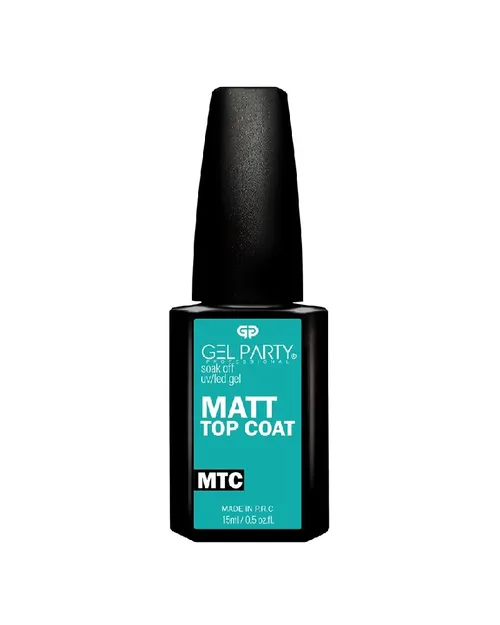
- Matte top coat works over both. Over cat eye, it gives a soft, suede-like finish. Over chrome, it gives the texture Marie Claire UK describes, but it will mute a mirror.
With good prep and capped edges, our GELDANCE gel polish typically lasts up to three weeks. If chrome is chipping at the tips in the first week, it's almost always an uncapped edge.
Removal
Cat eye and chrome both come off like gel polish, because that's what they're sitting in:
- File away the shine of the top coat to break the seal.
- Wrap each nail in a cotton pad soaked in acetone or a gel polish remover for 10 to 15 minutes.
- Gently push the softened gel off with a cuticle pusher. Never peel or pry.
- Finish with cuticle oil.
If the shimmer sits over a builder gel overlay, file the color off and keep the builder base as a foundation for the next set, or follow our builder gel removal guide if you're taking everything off.
Working safely with gels and powders
Keep uncured gel off the skin. Allergic reactions to nail gels usually build up from repeated skin contact with uncured product. As Doug Schoon told NAILS Magazine, allergies usually occur after four to six months of repeated exposure. Leave a tiny margin at the cuticle and sidewalls, wipe brushes on a disposable pad, and clean up any gel on the skin before curing. HEMA-free gels, like our GELDANCE cat eye collection, remove one common allergen, but HEMA-free does not mean allergy-proof. Our guide to HEMA-free and TPO-free gel nails explains the difference.
Cure fully, with the right lamp. Undercured gel is softer, wears worse and leaves more uncured material that can reach the skin. Schoon also warned in the same article that a lamp can look like it's working without curing the product completely. Our article on which UV/LED lamp cures gel properly explains what to check.
Control the dust. Chrome powders are very fine, and so is the dust from filing off top coat. OSHA's nail salon guidance says ventilation is the best way to lower the level of chemicals in a salon, and that N95 respirators protect against particulates such as dust when buffing or filing. Close jars after use, tap excess off the applicator rather than blowing it, and work on a surface you can wipe clean.
Troubleshooting: every common problem in one table
| Problem | Effect | Likely cause | Fix |
|---|---|---|---|
| Blurry or weak band | Cat eye | Thick coat, slow to cure, bottle not shaken | Thin coats, shake well, cure within seconds |
| Band off-center | Cat eye | Magnet tilted or not centered | Hold it level, directly over the middle |
| Mark in the gel | Cat eye | Magnet touched the wet gel | Keep 3 to 5 mm away; clean the magnet |
| Effect flat after top coat | Cat eye | Only one cat eye coat | Two thin coats, magnetizing each |
| Grainy or patchy chrome | Chrome | Surface wiped, dusty or scratched | Fresh no-wipe top coat, don't touch it |
| Chrome won't grab | Chrome | Top coat undercured or has a sticky layer | Full cure on a true no-wipe top coat |
| Dull, not mirror | Chrome | Too much powder, patting instead of rubbing | A tiny amount, rubbed firmly |
| Chipping at the tips | Both | Free edge not capped | Cap at every stage, especially over chrome |
| Wrinkled top coat | Both | Top coat too thick | Two thin layers instead of one thick one |
| Cat eye band hidden under chrome | Combined | Opaque mirror powder used over cat eye | Use sheer pearl or aurora powder, or keep mirror to the tips |
Running it as a service
Cat eye and chrome are easy add-ons because they use the same base routine as a gel polish service. A few things help them run smoothly in a salon:
- Swatch sticks over two bases for every shade, so clients choose from real results.
- One magnet set and one fluffy brush kept just for chrome, so powder doesn't end up in other services.
- Name your combinations. "Cat eye chrome," "ice aurora" and "chrome tip French" are easier to sell from a menu than "cat eye plus powder."
- Time it once. Do a full set of each look on a practice hand and note how many minutes it adds, then build that into your booking.
If you're stocking up for a new menu, our nail business supplies checklist covers the basics, and salons and distributors can find wholesale options in our gel nail products wholesale guide.
What's trending in 2026
The shimmer family isn't going anywhere, but the mood is shifting:
- Deeper cat eye. Nail artist and salon founder Christy Luo told Bustle in September 2026 that "cat-eye is getting deeper and more dimensional for fall," with the focus on layering it with rich seasonal colors and nail art.
- Ruby and dark red cat eye. At New York Fashion Week for Fall/Winter 2026, Coveteur reported that nail artist Pattie Yankee turned a ruby nail into a cat eye for Pamella Roland, with a finish that shifts in depth with the angle and light. Marie Claire's fall 2026 color report quotes manicurists predicting black cherry reds, oxblood and deep reds in jelly form.
- Aurora and ice aurora. The iridescent, Northern Lights look keeps coming back in winter, built from white or sheer bases, cool cat eye and pearl chrome.
Frequently asked questions
What's the difference between cat eye and chrome nails?
Cat eye is a gel polish with magnetic particles that you shape with a magnet before curing. Chrome is a dry powder of reflective flakes that you rub onto a cured no-wipe top coat. Cat eye gives a band of light that seems to move; chrome gives an even metallic or pearl surface.
Can you put chrome powder over cat eye?
Yes. Cure the cat eye, apply and cure a no-wipe top coat, then rub on the chrome and seal. Sheer pearl or aurora powders let the cat eye band show through; an opaque mirror powder will mostly cover it.
Do I need a no-wipe top coat for cat eye nails?
Not for the cat eye itself. Any gel top coat works over cured cat eye. You do need a no-wipe top coat if you're adding chrome powder on top.
What base color is best for cat eye and chrome?
Black gives the most contrast for cat eye and the deepest mirror for chrome. White makes pearl and aurora effects bright and icy. A sheer nude or milky base gives a soft, glassy glow.
Why does my cat eye look blurry?
Usually the coat is too thick, the bottle wasn't shaken, or there was a delay between the magnet and the lamp. Use thin coats, shake before every nail and cure right away.
How long do cat eye and chrome nails last?
They last as long as the gel service underneath. With good prep and capped edges, gel polish typically lasts up to three weeks. Chrome chips first at the free edge if it isn't capped.
How do you remove cat eye and chrome nails?
File the shine off the top coat, soak each nail in acetone or gel remover for 10 to 15 minutes, then gently push the softened gel off. Never peel or pry.
The bottom line
Cat eye and chrome look like cousins, but they work in opposite directions. Cat eye is about arranging particles in wet gel and freezing them with the lamp. Chrome is about laying flakes flat on a perfect cured surface. Keep that straight, choose the base color on purpose, cap every edge, and you can build almost any shimmer look a client brings you, from a quiet glazed nail to a ruby diagonal flash to a full ice aurora set.
Sources
- Era, NailKnowledge. How do cat eye nails work? The science behind the shimmer (iron oxide particles, magnet distance, dark bases, curing locks the effect). 4 May 2026, updated 22 September 2026.
- Kevin Nicholls, NailKnowledge. Cat eye nails at home (magnetic polish and magnetic powder methods, base color). 23 March 2026.
- Sam Morell, Natural Pigments. Pearlescent pigments: the science of optics (mica platelets coated with metal oxide, interference colors, coating thickness, angle). Undated, accessed 12 November 2026.
- Langa Chinyoka, Bustle. Aurora nails (Julie Kandalec on combining chrome powders, mylar films and cat eye). 2 June 2025.
- Jessica Fields, NewBeauty. Ice aurora nails (nail educator Evelyn Lim: white base, icy magnetic polish, pearlescent chrome). 24 December 2025.
- Tori Crowther, Marie Claire UK. Cat eye nails (cat eye chrome, matte cat eye chrome, chrome tips over cat eye). 9 December 2024.
- Emma Stout, Bustle. Fall 2026 nail art trends (Christy Luo on deeper, more dimensional cat eye). 28 September 2026.
- Bianca Asare, Coveteur. NYFW Fall 2026 nail trends (Pattie Yankee's ruby cat eye at Pamella Roland). 18 February 2026.
- Samantha Holender, Marie Claire. The trendiest fall 2026 nail colors (black cherry reds, oxblood, deep reds in jelly form). 17 August 2026.
- U.S. Occupational Safety and Health Administration. Health hazards in nail salons: chemical hazards (ventilation, N95 respirators for dust). Accessed 12 November 2026.
- Vanessa Jezin, NAILS Magazine. Preventing allergic reactions (Doug Schoon on repeated skin exposure and lamp curing). 1 May 2004.
- GEL PARTY product information: PRO Cat Eye Collection, GELDANCE Magnetic Cat Eye, GELDANCE 9D Cat Eye, Chrome Nail Powder (magnet distance, cure times, application, removal, wear).