A client's builder gel feels a little soft when you file it. Another set wrinkles on the thumbs. Someone pulls her hand out of the lamp because it's burning. Three different complaints, and very often the same root cause: the lamp and the gel aren't a good match, or the gel went on too thick for the lamp to cure it all the way through.
Builder gel is less forgiving than gel polish here, because it goes on thicker and it's the structure of the nail. An undercured overlay bends, lifts and can raise the risk of skin sensitization. An overheated one hurts. This guide explains what a lamp actually does, what to look for when you choose one for builder gel, and how to tell when your cure isn't right.
How a lamp cures builder gel
UV gels harden under light, not in air. NAILS Magazine's gel science explainer describes them as acrylate-based resins combined with photoinitiators, ingredients that react to light and start the curing reaction. They need the right wavelength and the right intensity of light to polymerize properly.
Both lamp types on the market produce UV light; they just do it differently. Kevin Nicholls' overview on NailKnowledge sums up the difference: LED lamps use diodes as bulbs, while traditional lamps use fluorescent tubes. LEDs emit a narrower range of wavelengths at a higher intensity; fluorescent tubes emit a broader range at a lower intensity. Gels are formulated around one or the other, or around a specific lamp.
So when people ask "what wavelength does this gel need?", they're asking only half the question. Nicholls makes this point directly in a separate NailKnowledge article: wavelength alone won't tell you whether a lamp cures a gel, because intensity, distance from the bulbs, internal reflection and cure time all matter too. The only reliable way to know is testing by the gel's manufacturer.
Fluorescent UV vs LED
Broad band, lower intensity
Slower cures. Tubes lose strength over time and need replacing. Stock photo via Pexels.
Narrow band, higher intensity
Faster cures and lower power use. More UV reaches the gel, so the gel has to be made for it. Photo: EARTH MOON 48W LED Lamp.
Both types emit UV light. The difference is the spread of wavelengths and how much light reaches the nail per second.
| Fluorescent UV lamp | LED lamp | |
|---|---|---|
| Light source | Fluorescent tubes | Light-emitting diodes |
| Wavelengths | Broader range | Narrower range |
| Intensity | Lower | Higher; Doug Schoon notes LED lamps emit much more UV |
| Typical cure | Slower; our Builder Gel label says about 120 seconds | Faster; about 60 seconds for our Builder Gel |
| Power use | Higher | Nicholls says around 30 percent lower wattage |
| Maintenance | Tubes need replacing regularly | Diodes can't be replaced; the whole lamp is replaced when output drops |
| Main risk with the wrong gel | Undercuring a gel made for LED | Overcuring and overheating a gel made for fluorescent lamps |
Why wattage is the wrong number to shop by
Most lamp listings lead with watts: 24W, 48W, 72W, 120W. It's an easy number to compare, and it's mostly beside the point. NailKnowledge's answer on buying by wattage is short: wattage measures how much electricity a lamp uses each second, not how much light it puts out, so it doesn't tell you whether your products will cure.
There's real data showing why. In a 2014 study in JAMA Dermatology, researchers measured 17 nail lamps from 16 salons at five positions inside each one. Higher-wattage devices did tend to emit more UVA, but the spread was enormous, and the light wasn't even across the positions inside a single lamp.
Same job, very different output
UVA irradiance measured by Shipp et al., JAMA Dermatology, 2014. The researchers also found the light was not uniform across positions inside the same lamp.
The practical takeaway: a "48W" label on two different lamps doesn't mean the same cure. A lamp specified or supplied by your gel's maker has been checked against that gel; a random lamp with a big wattage number hasn't.
Match the lamp to the gel
This is the single most important rule, and every expert source says it. Doug Schoon, writing for NailKnowledge, puts it plainly: UV gels should only be cured with the lamp or lamps specified by the gel's manufacturer. No UV gel can be formulated to cure properly in every nail lamp, and the idea that "dual" UV/LED lamps cure every gel is a false assumption. Both the wavelength range and the intensity matter.
The two ways it goes wrong:
- Too little light (undercure). The gel looks done on top but stays soft underneath. It bends, lifts and wears badly. The British Association of Dermatologists warns that product that isn't cured sufficiently can increase the risk of developing an allergy, and advises always using the recommended lamp and not using it with other polishes bought separately.
- Too much light, too fast (overcure and heat). Schoon explains that LED lamps emit much more UV than fluorescent lamps, which may be too much for products not designed for LED. Overcuring can overheat the coating, burn the nail bed and separate the nail plate from the bed.
If you're using a lamp from one brand and a gel from another, follow the gel maker's guidance on which lamp and how long. When in doubt, run a test nail before a full service.
Thin layers: the part no lamp can fix
Even a perfectly matched lamp can't push light through a layer that's too thick. Nicholls explains that a thick coat can look shiny and cured on top while staying soft underneath, and that curing longer doesn't fix it, because the light still can't get through. Builder gel is where this bites hardest, because it's the thickest layer in the service.
Light fades with depth
Simplified drawing of light inside a gel layer, not to scale. A photo can't show this; it's why builder gel is built in thin passes.
That's why our Builder Gel instructions say to avoid thick layers and to build in two thin layers if needed. Our complete builder gel guide walks through the full application, and the apex guide shows where the extra thickness should go.
Heat spikes and low-heat modes
The burning feeling some clients get in the lamp is a heat spike, and it isn't the lamp getting hot. Schoon explains that each time two molecules join during curing, a tiny amount of heat is released; across a whole nail, millions of these reactions add up. The thicker the layer, the more heat. Thumbs, with bigger nail plates, feel it first. A gel designed for a fluorescent lamp can overheat under an LED lamp because all that heat is released in a much shorter time. An over-filed nail plate makes everything worse, because it insulates the nail bed less well.
Nail educator Dani Bailey, writing in Scratch, describes the lamp-side fixes:
- Low-heat mode. Some lamps start with a smaller amount of UV and ramp up, so the gel begins curing more slowly.
- Start outside the lamp. Holding the fingers just outside the lamp, or the hand upside down, and then moving in slows the start of the reaction.
- Always finish the full cure. If you start a cure this way without the manufacturer's instructions, the hand has to go back into the normal position for a full cure. Otherwise the gel may not fully cure, which means breakdown and a higher allergy risk.
- Never make a client endure it. If she feels a heat spike, the hand comes out.
Our EARTH MOON 48W LED Lamp has a low-heat setting for sensitive clients for exactly this reason.
Thumbs, positioning and the lamp base
Thumbs are the usual trouble spot. Nicholls explains on NailKnowledge that thumbs are wider and flatter than other fingers, so product pools into a thicker, uneven layer, especially at the sides, and the lamp can't cure it fully. The result is wrinkling and a weak finish. His fixes:
- Apply thumbs separately so you can control the thickness.
- Keep the sides thin.
- Position thumbs so the whole nail faces the light. Many techs cure thumbs on their own, laid flat.
- A lamp with a mirrored or reflective base helps light reach hard-to-reach areas, but technique comes first.
For the other four fingers: keep them flat and still, centered in the lamp, and don't let them touch the sides. Keep the base clean; our lamp instructions recommend cleaning it regularly for even curing.
Flash curing with a handheld lamp
Small handheld or gooseneck lamps are useful for flash curing: tacking a soft gel tip in place, setting a bead of builder before it moves, or fixing art. They're not a replacement for the full cure in a five-finger lamp unless the gel's instructions say otherwise.
Flash cure, then full cure
- Flash cureA few seconds to lock a shape: our Builder Gel suggests about 10 seconds before the full cure.
- Then the full cureAbout 60 seconds in an LED lamp or 120 seconds in a UV lamp for our Builder Gel, depending on the lamp.
- Best usesTacking soft gel tips, setting a bead on one nail at a time, nail art and quick repairs.
Photo: GEL PARTY BABY LIGHT 2-in-1 Handheld UV/LED Lamp on its desk stand.
What to look for in a lamp for builder gel
| Feature | Why it matters for builder gel |
|---|---|
| Specified for your gel | The only real guarantee of a full, comfortable cure |
| Fits all five fingers with even light | The JAMA study found output varies by position; you want the nail where the light is |
| Timers that match your gel | Builder gels often need 60 seconds or more in LED; on a lamp with 10, 20 and 30-second presets that means running the timer more than once |
| Low-heat or ramp-up mode | Softens heat spikes on thick builder layers and thin nail plates |
| Reflective base | Helps cure the sides of the nail and thumbs |
| Auto sensor | Starts the cure when the hand goes in, so nails don't move while you press buttons |
| Cordless option | Useful for mobile techs, as long as the battery is charged; output can matter more than convenience |
| A brand you trust | Nicholls notes that cheap components can lose power within weeks, while better ones last years |
Signs your cure isn't right
| What you see or hear | Likely cause | What to change |
|---|---|---|
| Builder feels soft or gummy when filed | Undercure: layer too thick, wrong lamp, too short a time | Thinner layers, the specified lamp, the full label time |
| Wrinkling, especially on thumbs | Thick or uneven layer, poor thumb position | Thumbs separately, thin sides, cure flat |
| Lifting in the first week | Undercure at the base, or prep issues | Check the lamp and the prep; see why builder gel lifts |
| Burning in the lamp | Heat spike: thick layer, LED-only output on a gel not made for it, thinned plate | Thinner layers, low-heat mode, start outside the lamp, gentler prep |
| Cures used to work, now don't | Lamp output fading with age; Nicholls estimates about three years of normal use | Replace the lamp (or the tubes in a fluorescent unit) |
| One side of the nail cures worse | Uneven light inside the lamp | Center the hand, cure thumbs alone, check the base is clean |
| Redness or itching around the nails | Possible sensitization from uncured gel on skin | Stop and see a doctor; keep gel off the skin in future services |
Is the UV from nail lamps safe?
This comes up with almost every client, so it's worth having an honest answer.
- The measured risk appears small. The 2014 JAMA Dermatology study estimated that reaching a UVA dose linked with DNA damage in skin cells would take a median of about 12 visits, and concluded that the cancer risk from nail lamps appears small even with frequent use. The authors noted that the real-world risk of repeated manicures hadn't been tested.
- Lab studies raise questions. A 2023 study in Nature Communications by researchers at UC San Diego exposed human and mouse cells to a UV nail dryer and found cell death, DNA damage and mutations in the surviving cells. It was done in cells, not people, and the authors said long-term studies in people are needed before drawing conclusions about cancer risk.
- Simple protection is easy. Harvard Health and University of Utah Health both suggest applying sunscreen to the hands before a gel manicure or wearing fingerless gloves; Utah Health cites the American Academy of Dermatology's advice of SPF 30 or higher. Both UV and LED lamps emit UVA, so this applies to both.
Offering fingerless gloves or a sunscreen step is a small thing clients notice.
GEL PARTY lamps for builder gel
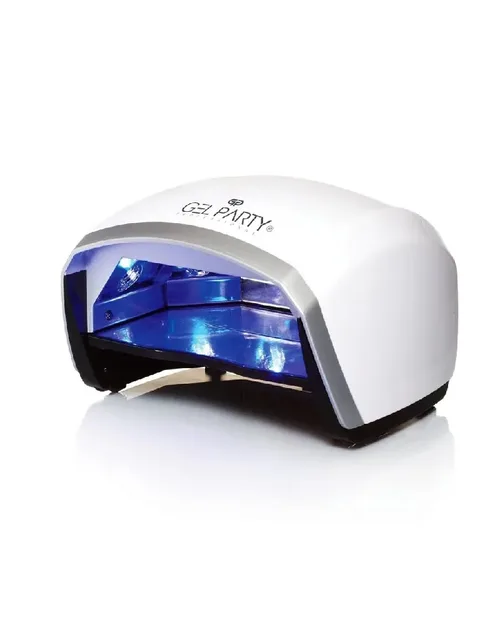
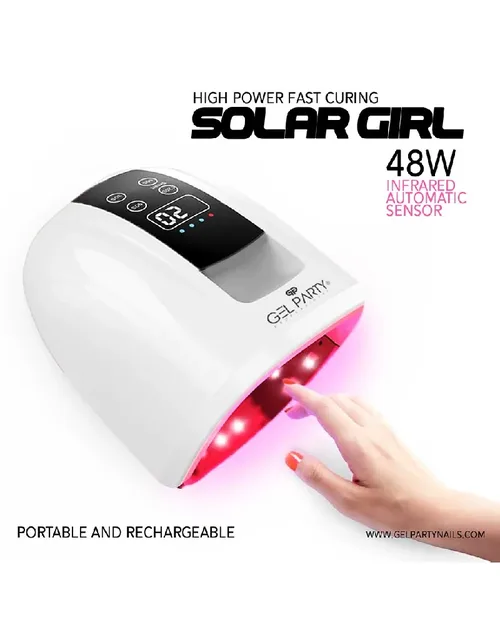
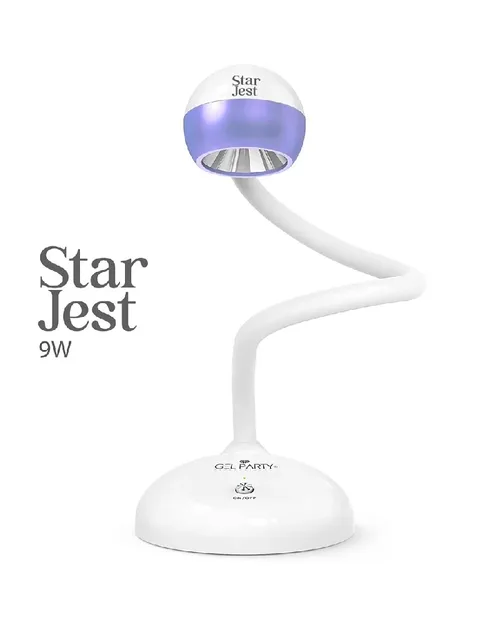
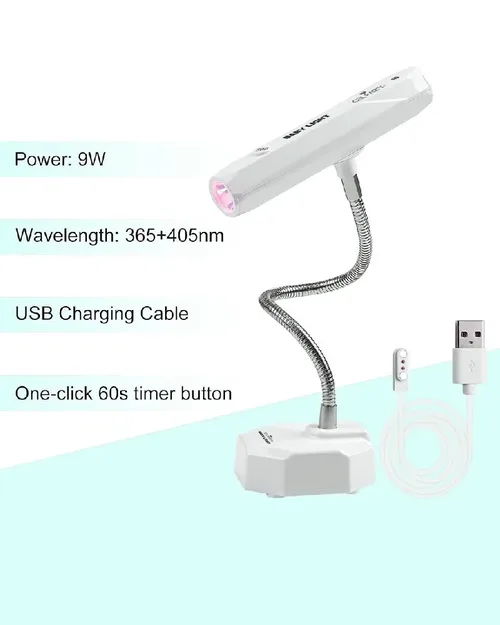
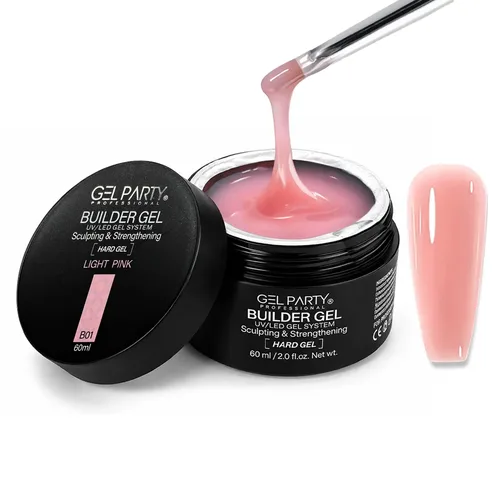
We make four lamps, each for a different part of the job. Our Builder Gel instructions give about 60 seconds in an LED lamp or 120 seconds in a UV lamp, depending on the lamp, plus a 10-second flash cure to lock the shape.
- EARTH MOON 48W LED Lamp: cures all five fingers at once, with 10, 20 and 30-second timers, an automatic hand sensor and a low-heat setting. Our main salon lamp for gel polish, builder gel and poly gel.
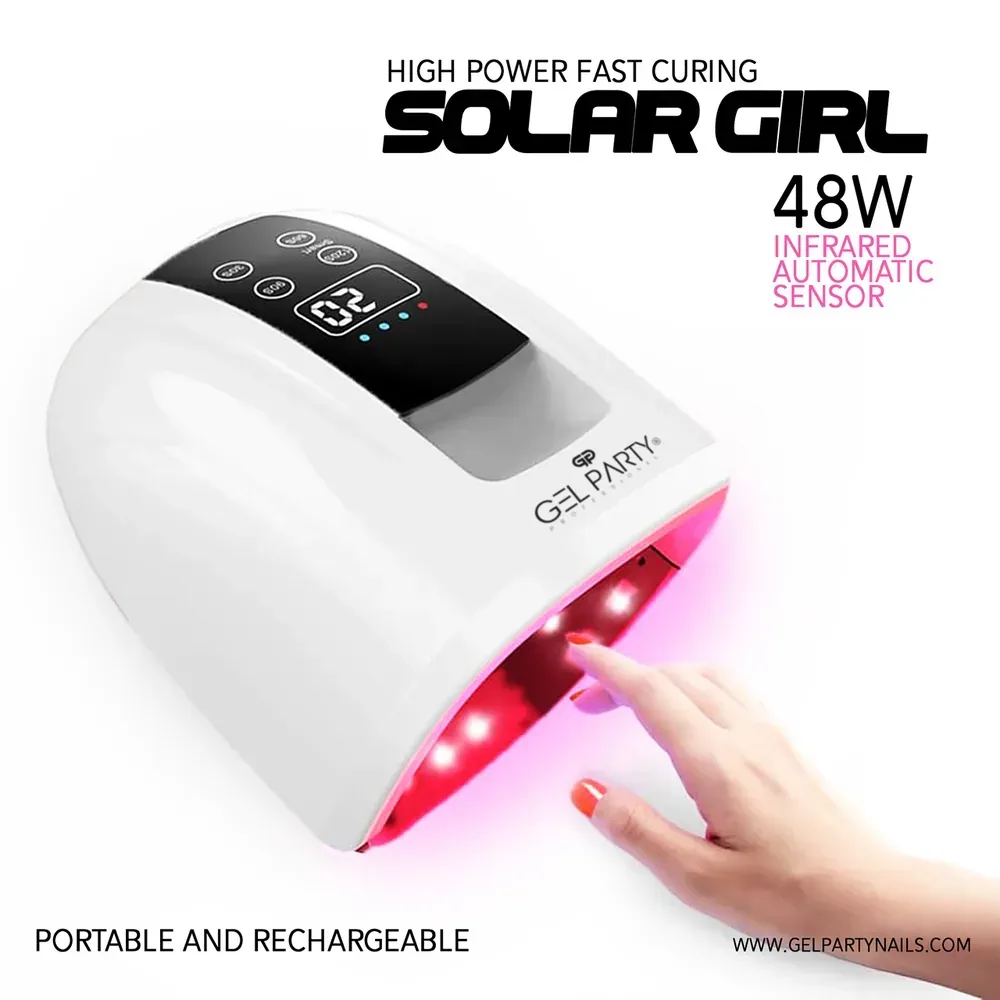
- SOLAR GIRL 48W Rechargeable UV/LED Lamp: cordless, with 48 UV/LED beads, a 15600 mAh battery that charges in about two hours, timer buttons and an LCD display. Made for mobile techs.
- STAR JEST 2-in-1 UV/LED Lamp: a task light for detailed work plus a focused UV/LED light for flash and full curing, on an adjustable neck. Handy for soft gel tips, art and pedicures.
- BABY LIGHT 2-in-1 Handheld UV/LED Lamp: works on its flexible stand or in the hand, with a 2500 mAh battery that runs up to 10 hours. Made for flash-curing tips and art.
Whatever the lamp: the label time, thin layers, and a test nail whenever you change lamps or gels. Choosing a builder texture too? Read rubber base vs builder gel vs hard gel.
Frequently asked questions
Do I need a UV or an LED lamp for builder gel?
Use the type your builder gel's maker specifies. Many modern builders are made for LED or combined UV/LED lamps, but no single lamp cures every gel. Our Builder Gel cures in about 60 seconds in an LED lamp or about 120 seconds in a UV lamp, depending on the lamp.
Is a higher-wattage lamp better for builder gel?
Not necessarily. Wattage measures how much electricity the lamp uses, not how well it cures a specific gel. Light output also varies inside the same lamp. Choose the lamp your gel was designed for, then follow the label time.
How do I know if my builder gel is fully cured?
Fully cured builder feels hard when filed and doesn't wrinkle or feel gummy underneath. If the surface files soft, if thumbs wrinkle, or if the set lifts within days, check layer thickness, the lamp and the cure time.
Why does builder gel burn in the lamp?
That's a heat spike from the curing reaction. Thick layers, big nail plates like thumbs, over-filed nails and very intense LED output on a gel not designed for it all make it worse. Apply thinner layers, use a low-heat mode if your lamp has one, and never make a client keep her hand in through the pain.
How often should I replace my nail lamp?
When cures stop working with the same gel and technique. As a rough guide, NailKnowledge suggests lamps deteriorate after about three years of normal use; fluorescent tubes need replacing much more often.
The bottom line
The right lamp for builder gel isn't the one with the biggest wattage on the box. It's the one your gel was made and tested for, used for the time on the label, on layers thin enough for the light to reach the bottom. Cure thumbs with care, use a low-heat start when clients feel heat, replace lamps when they fade, and offer a little UV protection for the hands. Get those right and builder gel cures hard, comfortable and evenly every time.
Sources
- Holly Schippers, NAILS Magazine. Gel smarts: the science beneath the surface (UV gels combine acrylate resins and photoinitiators and need the right wavelength and intensity). 31 July 2017.
- Kevin Nicholls, NailKnowledge. Understanding UV nail lamps: a comprehensive overview (LED vs fluorescent, wavelength range and intensity, lower wattage, lifespan of about three years, non-replaceable diodes). 2 November 2023.
- Kevin Nicholls, NailKnowledge. The UV gel wavelength mystery (wavelength alone doesn't predict a cure; intensity, distance, reflection and time; component quality; cool cures). 10 January 2024.
- Doug Schoon, NailKnowledge. If I use an LED nail lamp on a product designed for traditional UV nail lamps, will the UV gel become over cured? (use the lamp specified by the gel maker; LED lamps emit much more UV; overcuring risks; no lamp cures all gels). 5 January 2024.
- NailKnowledge. Should I buy my nail lamp based on wattage? (wattage is electricity used, not light output; buy the lamp for your system). Undated.
- L. R. Shipp, C. A. Warner, F. A. Rueggeberg, L. S. Davis, JAMA Dermatology. Further investigation into the risk of skin cancer associated with the use of UV nail lamps (17 lamps, 16 salons, UVA irradiance 0.6 to 15.7 mW/cm², uneven output, risk appears small). 30 April 2014.
- Kevin Nicholls, NailKnowledge. Understanding nail gel lifting and the role of builder gels (undercuring from short time, a faulty or incompatible lamp, or thick layers causes lifting). 31 July 2023.
- Doug Schoon, NailKnowledge. Heat spikes during UV gel nail coatings (cause of heat spikes, thicker layers release more heat, LED vs fluorescent, over-thinned plates). 18 March 2022.
- Dani Bailey, Scratch. Heat spikes in gel nail services: why they happen & how to avoid them (low-heat modes, starting outside the lamp, completing the full cure). 9 November 2024.
- Kevin Nicholls, NailKnowledge. Wrinkling and curing issues on thumb nails (why thumbs wrinkle, thin sides, positioning, mirrored bases). 25 February 2025.
- British Association of Dermatologists. Dermatologists reiterate artificial nails warning and risk of at-home kits (undercuring and allergy risk; use the recommended lamp). 14 April 2023.
- M. Zhivagui, L. Alexandrov et al., Nature Communications, via Phys.org. Study finds that UV-emitting nail polish dryers damage DNA and cause mutations in cells (cell study; long-term human studies needed). January 2023.
- Harvard Health Publishing. Safety of LED nail lamps (UV and LED lamps both emit UVA; sunscreen or fingerless gloves). Updated 19 April 2021.
- University of Utah Health. Gel manicures: how to reduce the risk of skin cancer (fingerless gloves; sunscreen SPF 30 or higher per the American Academy of Dermatology). 3 March 2023.
- GEL PARTY product information: Builder Gel, EARTH MOON 48W LED Lamp, SOLAR GIRL 48W Lamp, STAR JEST 2-in-1 Lamp, BABY LIGHT Handheld Lamp (cure times, timers, features).